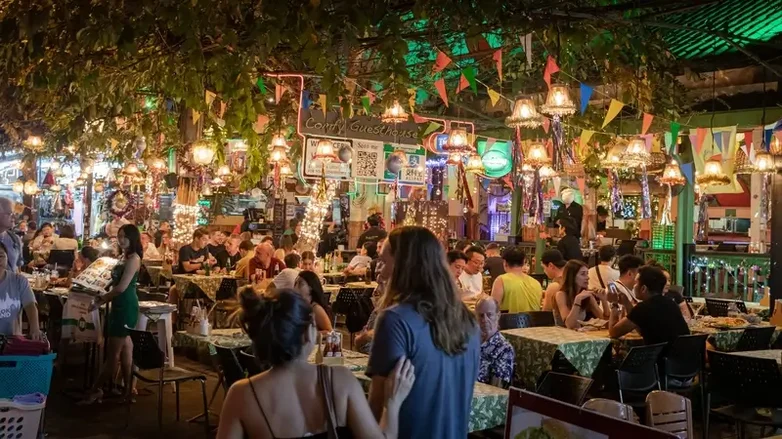
My Parents Invited Me to Dinner to “Make Amends” Then Dad Told the Waiter I Could Wait Until Dessert While I Couldn’t Breathe

Twenty minutes into dessert, the paramedics were kneeling next to me on Rosemont Grill’s shiny floor, breaking the rigid silence my parents had been attempting to keep all night.

With her napkin still wrapped over her lap, my mother sat still.
My dad appeared agitated.
Not scared. annoyed. As if my slumping beside the table was just another self-centered prank from the daughter who had always caused problems.
Can you hear me, ma’am?A paramedic inquired.
I attempted to respond to him. Like shattered glass, my breath came in and went out of me.
Diners were gazing over their candles across the room. With the phone still in his hand, the manager, a broad-shouldered man named Luis, stood by the hostess stand.
He had called 911 despite my father’s explicit directive to avoid becoming involved in family matters.
My father remarked sternly, “She’s dramatic.” “Since college, she has struggled with anxiety.”
He was observed by the second paramedic. “Please take a step back, sir.”
My mother said, “She does this.” You would apologize for a barking dog in a low and embarrassed manner. “She becomes overburdened.”
I wanted to yell at them both.

For just this reason, I wanted to inform the entire restaurant that I hadn’t spoken to these two individuals in three years. Pain can be rewritten in real time by them as an annoyance.
The paramedic then leaned over and grabbed the little orange bottle that was next to my plate.
“Did she accept these?”
My dad’s expression shifted.
Perhaps for a half-second.
However, I witnessed it.
It was a medication for my heart. Since my diagnosis at age 28, I’ve had the same bottle in my purse.
However, I hadn’t placed it on that table. At dinner, I hadn’t opened it. I hadn’t touched it since seven in the morning.
Luis moved to the front.
“Earlier, I witnessed her mother reaching into her bag.”
My mom’s mouth dropped open. “That accusation is abhorrent.”
After examining the label, the paramedic tipped the container to determine how much was left.
“You took how many tonight?”
“None,” I made myself say.
My father’s chair scraped the floor when he stood so quickly.
“This is ridiculous. To make amends with our daughter, we came here.

And Luis looked directly at him, despite having every professional incentive to be quiet and let the paying customers take care of it.
“So why did you advise me against making an ambulance call?”
My dad’s mouth tightened.
There was silence in the room.
The paramedic leaned in close to my face.
“You’re heading to the medical facility. Remain with me.
I gave my parents one more glance as they hoisted me onto the stretcher.
By then, my mom was crying. Not in my case. People were watching, which is why she was crying.
Luis was the object of my father’s intense gaze, as if he had already chosen who to punish first.
Then they rolled me out into the chilly blue flash of the ambulance lights, past the dessert cart my father had instructed me to wait for.
The emergency department at Mercy General in Portland smelled like burned coffee, rain-soaked clothes, and disinfectant.
As nurses moved around the bed to attach wires to my chest and slide an oxygen mask over my face, the fluorescent lights above my head faded into white bars.
Clara Pierce is my name. At thirty-two, I had spent the last three years reconstructing a life for which my parents had taught me to feel guilty.
Dr. Maya Henderson, a physician with serene eyes and silver hair, introduced herself. She gently but quickly asked her questions.

Which drug? When was the last time I took it? Had I consumed alcohol? any allergic reaction history. pressure in the chest. lightheadedness. numbness.
I responded as best I could.
The one I had been dreading then arrived.
“Tonight, was your medication handled by anyone else?”
I peered through the bay’s glass wall.
My parents were outside in the corridor.
My mother had her arms crossed over her cream coat. My father was talking to a police officer with the practiced confidence of a man who has intimidated teachers,
neighbors, receptionists, and relatives into backing down for forty years.
“Yes,” I said.
Dr. Henderson paused. “Who?”
“My mother.”
It didn’t come out loudly. It came out clearly.
A nurse wrote something down.
And Dr. Henderson looked at me for one long second — not with pity, with attention.
It was the first time all night that anybody had looked at me like my version of events was information.
The blood work came back abnormal.
Not deadly. Not just yet. But serious enough that Dr. Henderson told the officer there was reason to suspect my medication had been tampered with,
or that I had been given an unsafe dose without my knowledge.

The officer’s name was Dana Collins. She came to my bedside while my parents watched through the glass.
“Clara. The restaurant manager provided a statement. He also tells us the dining room has security cameras.”
My pulse jumped under the monitor leads and the machine reported it to the whole room.
“Do you want to make a statement?”
For years I had imagined this moment. I always thought that if I ever said the true thing out loud, it would come out powerful and clean.
Instead my voice shook the entire time.
“They invited me to dinner after three years of no contact. My mother demanded I bring my purse inside instead of leaving it in the car. During dinner she asked me to come to the restroom with her
and I said no. Later I noticed my purse had been moved off my chair onto the floor by her feet. And suddenly my chest started hurting.”
Officer Collins wrote without interrupting me once.
“My father told them not to call 911,” I added. “He said I could wait until dessert.”
Out past the glass, my father stopped talking mid-sentence.
He’d heard me.
And for the first time that night, fear came into his face.
Not fear for my life.
Fear of a consequence.
By morning, the story my parents wanted to tell had already started coming apart.
The restaurant’s security footage showed my mother standing beside my chair while I was in the restroom, before our appetizers came out.
She had told everyone, twice, that she never touched my purse.
On the video, she bends down, opens it, and takes the small orange prescription bottle out of the side pocket.
The camera position doesn’t show exactly what she did with it under the table thereafter.
But it reveals enough.

Her hands are visible. The bottle is visible. It shows her handing something to my father beneath the white tablecloth.
And it shows my father staring toward the waiter, then toward me, then pushing his water glass closer to mine.
The police did not arrest them that morning. Real life doesn’t move like television. There was no dramatic handcuffing in a hospital corridor, no confession, no detective slapping images down on a table.
There were interviews. Evidence bags. Lab requests. Formal statements. And a hushed directive from Officer Collins that my parents were not permitted in my treatment area.
That did not stop them from attempting.
At 9:17 that morning, my mother contacted my phone seventeen times.
At 9:42, my father left a voicemail.
“Clara.” Calm and composed. “You must carefully consider what you are implying. Your mom is heartbroken.
You made us look foolish in front of others. We are prepared to overlook this, but before it becomes irreversible, you must cease communicating with strangers.
I gave it a listen once.
I then gave Officer Collins the phone.
Her look remained unchanged as she listened the entire time.
“That was helpful,” she remarked after it was over.
In that hospital bed, the word nearly made me laugh aloud.
beneficial.
Throughout my entire life, my father made threats seem like advice.
He had recorded one this time.

I was detained overnight for observation by Dr. Henderson.
My recommended cardiac medicine has a dangerous interaction with another chemical that could significantly increase its effects, according to the lab results.
I hadn’t intentionally consumed that stuff.
My water glass, the prescription bottle, and the table setting residue were sent off for testing by the police.
That afternoon, Luis visited the hospital.
Since the cops had previously examined my purse, he delivered it in a sealed paper bag. With his manager’s cap in both hands, he stood clumsily in the doorway.
“I apologize,” he said. “I keep thinking that perhaps I ought to have called earlier.”
“You called.” I was still having trouble breathing, and my throat was sore. “That’s what counts.”
His face remained disturbed even as he nodded.
“I heard from your father that you were unstable. He stared at the floor and stated, “Calling an ambulance would make your condition worse, that it would escalate things.” “He was really persuasive.”
“He usually is.”
Luis paused.
The waiter overheard him say something different. prior to your illness.
I gripped the blanket more tightly.
“What?”
“After tonight, she’ll have to listen,” he remarked.

The space was skewed.
I had been wondering what my parents truly desired from me for three years. An apology? Authority? Cash? The satisfaction of demonstrating my continued need for them?
All of that proved to be far more complicated than the solution.
They want entry.
My parents had benefited from an old life insurance policy from my first full-time job before I ceased talking to them.
Until a hospital social worker inquired for emergency contacts and legal paperwork, I had forgotten about it.
I had updated my will, emergency contact, and medical proxy three years prior to going no contact.
It wasn’t until my fiancé Daniel helped me organize my paperwork after we got engaged six months ago that I altered that antiquated company policy.
That was unknown to my parents.
They thought that if something happened to me, they would still be able to get $250,000.

I was on the verge of saying no when Officer Collins inquired about my parents’ financial difficulties.
In Beaverton, Richard and Evelyn Pierce reside in a tidy two-story home. Their vehicles are leased. They dress in a way that gives the impression that they are safe.
However, their preferred currency has always been appearances.
In roughly four hours, Daniel discovered the truth.
He’s not a detective. He works as a forensic accountant for a private company and has spent ten years studying the patterns that people attempt to conceal.
A second mortgage was listed in public documents. a civil ruling resulting from an unsuccessful investment venture. Two liens.
Behind the groomed hedges and white draperies, creditors were silently circling.
Despite living fifteen minutes away, Daniel appeared to have driven all night when he arrived at the hospital.
When he noticed that the wires were still on me, his face turned absolutely pale and his hair was wet from the rain.
He didn’t inquire as to why I had attended that meal.
He was well aware of the reason.
Because a part of me still yearned for parents despite everything.
Not the real Richard and Evelyn. For ten years, I had been silently lamenting the imagined version. The person who might claim that we injured you.
The person who could wonder how to fix this. The one who might regard me as a daughter rather than a misplaced item.

Daniel grasped my hand and planted a kiss on my knuckles.
“You’re secure now.”
I really wanted to believe him.
The inquiry took four months to complete.
During that period, my parents employed every strategy I had learned as a child.
First, denial. Then indignation. Then becoming a victim.
In a lengthy email, my mother claimed that she had just handled my purse after noticing it falling off the chair.
Despite the fact that Luis was born in Seattle and speaks English more fluently than my father does when under duress, my father claimed that Luis had misinterpreted him because of cultural differences.
The family campaign followed.
Patricia, my aunt, called me in tears.
“Your mother claims that you are attempting to put her in jail.”
“She added something to my drink.”
The line paused.
“But she’s your mother,” he whispered.
I used to find that sentence to be effective. For thirty years, it was effective for me.
“I am aware,” I replied. “It’s worse because of that.”
I ended the call.
Assistant District Attorney Naomi Feld, the prosecution, developed the case methodically.
My water glass contained traces of a sedative that could dangerously increase the dosage of my heart medicine, according to the test.
The medication bottle had my mother’s fingerprints on it.
After the waiter refreshed the table, my father raised my water glass by the rim and placed it closer to me, leaving his fingerprints on it in an uneven position with any incidental contact.
The voicemail was there.
Luis’s statement was there.
The waiter made a statement.
Then there was the one serious error made by my father.
Two weeks before to that dinner, he had called my former insurance provider to inquire about whether a beneficiary could still receive benefits in the event that the insured
person passed away during a medical emergency.
He said he was inquiring about his own policy.
The conversation was captured on tape.
By accident, he also revealed my birthdate.
At that point, the entire case took a different turn.
Conspiracy, attempted aggravated assault, and attempted insurance fraud were the charges that were returned.
Naomi thought about attempted murder and honestly told me that it would be very challenging to prove intent to kill beyond a reasonable doubt. The evidence demonstrated that they planned to
render me helpless, cause a medical emergency, and be in a position to profit if I passed away as a result.
ugly, cunning, and perilous. However, the law demands accuracy.
I agreed to that.
I didn’t require the most severe label.
To stand up in a room where my parents could not change it, I needed the truth.
The trial began at the Multnomah County Courthouse the following spring.
My mom was dressed in pearls and navy blue.
At parent-teacher conferences, bank meetings, and every conflict I experienced as a youngster, my father wore a gray suit and had the same face. Patient dissatisfaction.
It was as if everyone in his immediate vicinity had just not acted rationally.
I was portrayed by their lawyer as erratic, bitter, and driven by money.
He mentioned that I hadn’t spoken to him for three years, as if avoiding nasty people is a sign of cruelty in and of itself.
He questioned why, if I thought my parents were hazardous, I had accepted the dinner invitation.
I gave an honest response.
“Because I thought they had changed.”
The courtroom fell silent.
He gave it another go. “So you went to dinner with them voluntarily?”
“Yes.”
And feelings were flowing strong during that meal?”
“No,” I replied. “They were courteous until I was out of breath.”
A few gallery patrons moved about in their chairs.
His lips were squeezed together. I take it that you have a history of anxiety?”

“Every time I reacted to something real, I was called anxious.”
Before he could turn that into something else, Naomi raised an objection.
However, the jury had already heard what I had to say.
Next to testify was Luis. He told how my father forcibly prevented him from making an emergency call.
According to the waiter’s testimony, she will have to listen to what my father said after tonight.
Twelve persons could understand Dr. Henderson’s explanation of the medical risk.
The voicemail was played by Officer Collins.
Naomi then performed the insurance call.
That courtroom was filled with my father’s recorded voice.
Is there a compensation delay if the beneficiary is still listed and the insured passes away during a medical episode?
The agent requested the policyholder’s information.
My birthdate was also provided by my father.
My mom shut her eyes.
She appeared elderly for the first time in my life. Not brittle. Not innocent.
simply outdated.
I didn’t cry when the verdict was announced.
guilty of conspiracy.
guilty of attempting to commit severe assault.
guilty of trying to commit insurance fraud.
It sounded like air escaping a punctured tire when my mother spoke.
My father’s face was flushed and composed as he looked straight ahead, as if he could still make peace with reality if someone would just give him five more minutes.
The judge gave me permission to make a victim impact statement at sentence.
Daniel was at my side as I got to my feet.

My hands trembled. My voice didn’t.
“I was taught that my pain was inconvenient for the majority of my life,” I remarked. “I was dramatic when I wept as a kid. I was looking for attention if I was ill. I was unappreciative if I didn’t agree with
something. I left three years ago because I wanted to live without having my needs controlled, ridiculed, or punished.
My mom glanced at the table.
My dad didn’t.
“My father told a restaurant manager I could wait until dessert when I said I couldn’t breathe during dinner.”
I took a moment to consider that.
“I can’t think of a better way to describe my family than that sentence. Appearances were more important than my existence.
The evening was more significant than my dread. Control was more essential than my body.
The judge was keeping a careful eye on me.
“I’m not requesting that this court fix the damage they caused. I no longer want that because it is not feasible.
I’m requesting that the court acknowledge that there was no miscommunication. It wasn’t a family dispute. It wasn’t a daughter going overboard.
At that moment, I glanced at my father.
“This was prearranged.”
Daniel gave me a painful grip on my hand once I was done.
Both of them received prison sentences.

My mom was sentenced to seven years.
My dad received nine.
The insurance call, the voicemail, and his attempt to prevent me from receiving emergency assistance were what made a difference.
Under a dismal Portland sky, media waited on the stairs outside the courthouse. I was told by Naomi that they might be.
The questions flowed quickly and overlapped.
Do you forgive your parents, Clara?
Was the sentence fair, in your opinion?
Did the judgment surprise you?
I glanced at the cameras. Next, Daniel. Then at Luis, who had arrived on his day off, standing in the rear of the throng.
I said, “I’m alive because someone believed me quickly enough to take action.” “I just want to say that.”
Daniel and I tied the knot in a modest ceremony by the Columbia River Gorge two months later.
Dr. Henderson, Officer Collins, and Luis were among the twenty-six visitors.
Nobody spoke about how important family is.
I was never informed that blood is thicker than water.
No one asked me to make place for those who thought they were in love.
Daniel held my hand beneath the table at the reception.
“Are you alright?”
I surveyed the space. Over platters of roasted veggies and fish, friends are laughing. The windows are being tapped by the rain. Instead of sitting across from me, my new emergency contact is seated next to me.
“Yes,” I said.
I really did mean it.
For years, I believed that an apology would bring about closure.
To be honest, I used to imagine my mother crying. At last, my father spoke clean about it. They both say my name without taking any responsibility for it.
They never found closure.
It originated from a management of a restaurant who wouldn’t turn away.
It originated from a physician who trusted my body’s evidence.
It originated from an officer who didn’t consider my dread to be a sign of temperament.
It originated in a courtroom where the weight of the facts caused my parents’ polished narrative to crumble.
For the most part, it started when I realized that I didn’t need their consent to survive.
My medication is still in my purse.

I still double-check the cap.
In restaurants, I still occasionally sit with my back to the wall.
The caution was not eliminated by healing. All it did was make the caution’s home more peaceful.
I returned to Rosemont Grill a year after that dinner.
Not by me. Luis, who had somehow developed into a true friend in that peculiar, enduring manner people do after standing alongside inside one horrible night, accompanied me, as did Daniel.
We were seated at a table by the window, far from the one where I fell.
Dessert was presented by the server without any orders.
cake with chocolate. Three forks.
Luis grinned. “In the house.”
I spent a long time staring at that platter.
Then I chuckled.

Not because it was humorous.
since I was present.
Because no one had urged me to endure in silence until dessert arrived.
Because merely remembering caused my chest to constrict this time.
And it was easy for me to breathe in.
Disclaimer: This is a fictional narrative written for amusement. Any similarity to actual people, places, or events is purely coincidental.