My Ex-Husband’s Wife Took Away Our 9-Year-Old Daughter’s $3,400 Hearing Aids as Punishment, So I Drove 60 Miles for Another Pair

Mrs. Lund called me at 8:20 on a Monday morning in April, and the first thing she said was my daughter’s name.
Not hello. Not good morning. Just, “Amanda, it’s about Emma.”
She said it in that careful voice teachers use when they’ve already decided how to say a hard thing.
I was standing behind the front desk at Olson Family Dentistry with the second phone line blinking

and a patient’s insurance card in my other hand. I set the card down. Kim, who does our scheduling, looked up from her screen, saw my face and stopped talking mid-sentence.
“Emma isn’t wearing her hearing aids today,” Mrs. Lund said. “I asked her where they were. She said
her stepmom has them. She said she gets them back on Friday.”
For a second, I honestly thought I’d heard her wrong.
That’s the kind of joke the world plays on you when your child is hard of hearing. You start
doubting your own ears instead of the thing you just heard.
“Friday,” I said.
“That’s what she told me. She said it was for talking back at supper on Saturday.”
Mrs. Lund paused. I could hear children’s voices somewhere behind her, the hallway noise of a school waking up.
“We had our spelling test first thing this morning,” she said. “I read the words out loud, like I
always do. She sat there and cried through the whole thing. She couldn’t hear a single word, Amanda. She wrote her name at the top of the paper, and then she just put her head down on her desk.”
I put my free hand flat on the counter. It was cold. I remember that. And I remember the little bell on the front door jingling as Mr. Peterson came in for his nine o’clock cleaning half an hour early, the way he always does.
“I sent her down to the nurse once already,” Mrs. Lund went on. “Not because she’s sick. Just so she could have a quiet minute. She came back and sat in the front row and watched my mouth the whole time I was teaching fractions. She’s working so hard. She’s exhausted, and it isn’t even nine
o’clock.”
“Thank you for calling me,” I said.
My voice came out flat and polite. The voice I use for patients who are behind on their bills.
“Thank you, Mrs. Lund. I’m going to fix it.”
“I didn’t know if I should call you or her dad,” she said. “You’re both on the emergency card.”
“You did right,” I said. “Give me a couple of hours.”
I hung up and stood there in my light blue scrub top with my gray fleece zipped all the way to my chin, because the office is always freezing in the morning. And I tried to decide what to do first.
Kim came around the desk. She’s worked with me for six years. She has two boys of her own, and she knows Emma, because Emma does her homework in our break room on the afternoons when the sitter cancels.
“What happened?” she asked.
“Kendall took Emma’s hearing aids,” I said. “Over the weekend. As a punishment.”
Kim’s mouth opened. Then it closed again. She didn’t say anything for a moment, which for Kim is
a very long time.
“Took them where?” she finally said.
“Home, I guess. She’s keeping them until Friday.”
“She can’t hear without them,” Kim said, like I might not know.
“No,” I said. “She can’t.”
We found out about Emma’s hearing when she was four.
She was a quiet little girl, and everybody told me that was just her nature. My mother said I was the same way at that age. Chad’s mother said some kids are thinkers.
But I noticed things.
She turned the cartoons up louder than her cousins did. She didn’t come when I called her from the kitchen. She didn’t startle when the screen door banged shut behind her. At church, she watched the pastor’s face instead of looking down at her coloring sheet like all the other kids.
That spring, her preschool did a hearing screening. She failed it in both ears.
They sent home a half sheet of paper that said, “Please follow up with your provider.” I read it standing in the driveway with my car keys still in my hand, and I felt the whole world tip a little to
one side.
Our family doctor sent us to a pediatric audiologist in Sioux Falls, sixty miles down the road. It was the closest one who worked with young kids.
The audiologist was a woman named Dr. Meyer. She sat Emma in a little soundproof booth with big headphones and had her drop a block in a bucket every time she heard a beep.
I sat outside the window and watched. Emma missed more beeps than she caught. She kept
looking at the window, at me, like she was waiting for me to tell her when to drop the block.
The diagnosis was moderate hearing loss in both ears. Nobody could tell us why. Nobody in either family had it. Dr. Meyer said sometimes it just happens, and that the important thing was to
get her hearing now, while she was still learning to talk and read.
“Without amplification,” she told us, “she’s hearing speech like it’s coming through a wall. She gets the vowels. She loses a lot of the consonants. So ‘cat’ and ‘cap’ and ‘cab’ all sound exactly the

same to her.”
Chad sat next to me in that little office and held my hand. We were still married then. He asked good questions. He asked whether it would get worse. Whether she’d be able to play sports.
Whether kids would tease her.
He asked about the cost last. And he asked it quietly.
“Thirty-four hundred dollars for the pair,” Dr. Meyer said. “That includes the earmolds, the fitting
and the follow-up visits for the first year.”
Our insurance through Chad’s job at the time paid nothing toward hearing aids. Not one dime. I went home that night and found it in the plan booklet. They were listed under “Exclusions,” right
underneath cosmetic surgery.
I thought that was just about the cruelest place on earth to put them.
We set up a payment plan with the clinic. $142 a month for twenty-four months. I paid it off a little
at a time, the last payments coming after Chad and I had already split.
I never asked him for half. He offered once, and I told him to put it toward her school clothes instead. And he did. Every August, he took her to the outlet mall and let her pick out whatever she
wanted, and she always came home with something purple.
The first day Emma wore her hearing aids, we walked out of the clinic into the parking lot, and a semi went roaring by on the street.
She grabbed my leg and screamed.
Then she looked up at me with her eyes huge and said, “Mama, the cars are so loud.”
I sat down right there on the curb and cried in front of half of Sioux Falls.
On the drive home, she made me pull over at a rest stop so she could listen to the birds. She stood in the grass by the picnic tables with her head tipped to one side for ten whole minutes. A trucker walking to the restroom asked if she was all right.
“I can hear the birds,” she told him.
He looked at me, confused. I just nodded, because I couldn’t talk.
She’s had five years with them now. She’s in third grade. She reads above grade level. She sings in
the children’s choir at church, slightly off key and very proud of it.
She takes her hearing aids out every night and puts them in their little tan case on her nightstand. And every morning, she puts them back in before she even gets out of bed.
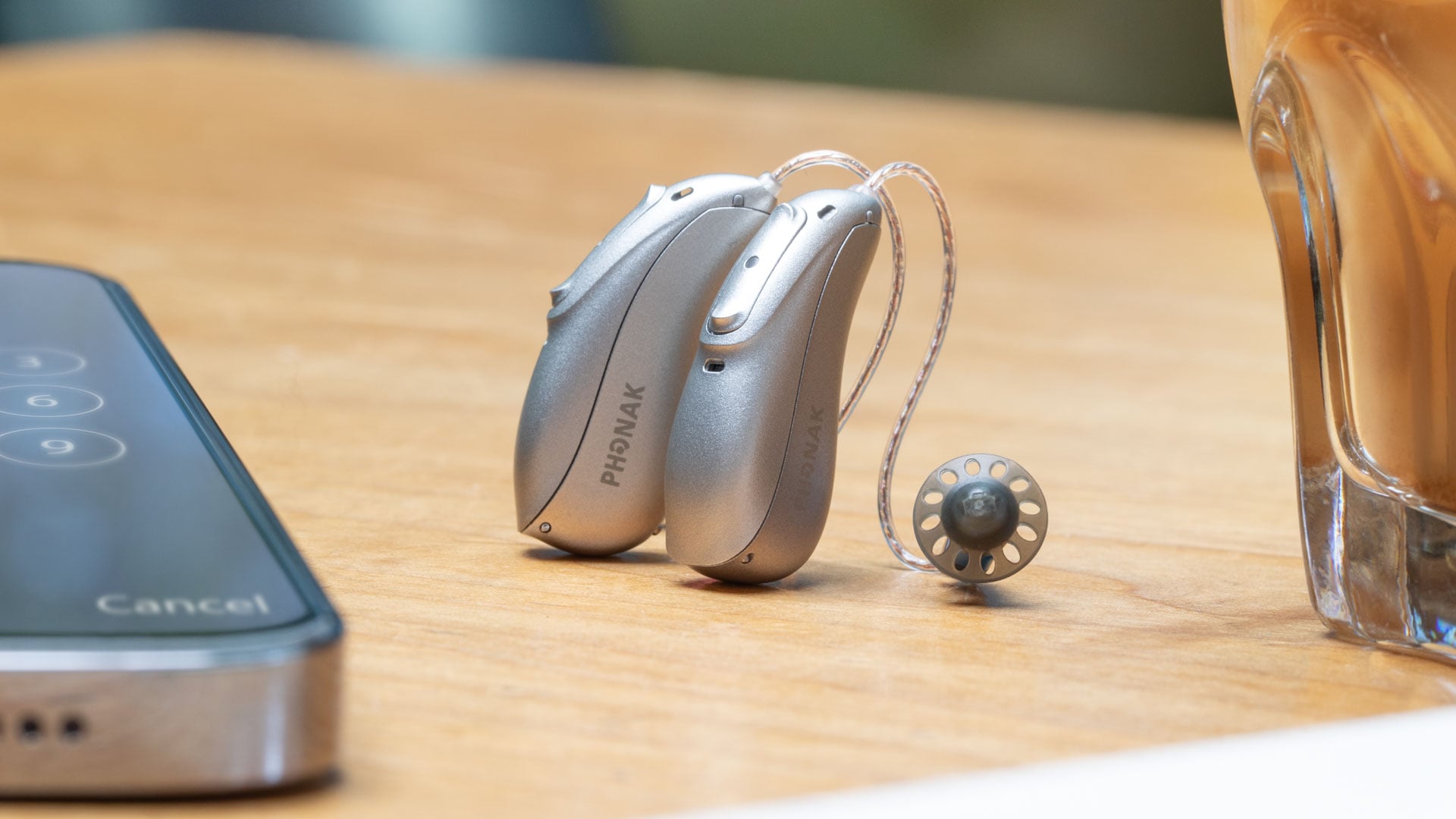
They’re behind-the-ear aids. Purple, because she picked the color. They have custom earmolds we replace every year as her ears grow, $180 a pair. They run on tiny batteries, size 312, and the battery doors lock with a little tool so a small child can’t swallow anything. Emma’s been changing
her own batteries since she was seven.
Chad and I divorced when Emma was five. It wasn’t anybody’s big villain story. We married young. We both worked too much. And somewhere along the way, we stopped talking about
anything but bills.
We split the furniture and the friends as fairly as we could. We sat in a mediator’s office in the county courthouse and signed a parenting plan, eleven pages long, and we agreed that Emma
came first. Chad pays $612 a month in child support. He’s never been one day late.
He has her every other weekend, Friday after school until Monday morning. On Mondays, he drops her at the school curb on his way to an early shift at the co-op elevator. She hops out
before the truck has quite stopped. He’d never once had reason to look at her ears.
In spring, he also helps his brother Mike on the farm, because Mike’s knees aren’t what they used to be and somebody has to string the wire.
Chad married Kendall two years ago. She’s 35, four years younger than me. She works as a loan processor at the bank in the next town over. She’s pretty and organized and keeps a very clean house.
I’d met her maybe a dozen times. Mostly in the school parking lot. Once at a Christmas program, where she sat next to Chad’s mother and clapped politely.
She was never mean to Emma, as far as I knew. She just never seemed easy around her. Emma
said Kendall had a lot of rules.
That didn’t bother me. Rules are fine. Every house has them. I had my own list of rules, and Emma thought mine were just as bad.
But there had been little things.
A few months earlier, Emma came home from a weekend and told me Kendall said she “used her ears as an excuse.”
Another time, Kendall told her she didn’t need to wear her hearing aids at the supper table, because “we’re right here, we can just talk louder.”
I mentioned that to Chad on the phone. The call went sideways fast. He thought I was picking at
his wife. I thought he wasn’t listening. By the end of it, we were both dragging up things from four years earlier that had nothing to do with hearing aids.
And Emma was in the next room hearing every word. Because, of course, she had her aids in.
After that night, I learned to let the small things go. Chad and I had worked so hard to stop fighting in front of her. I wasn’t going to start again over a supper table rule.
But this was not a supper table rule.
I stood at the front desk with my hand still on the phone and thought about calling Chad.
Anybody would have. It was the obvious thing. And later, more than one person asked me why I didn’t.

Here’s the plain truth. A phone call would have started a fight. And a fight wasn’t going to put sound in Emma’s ears before lunch.
Chad would get defensive. I would get sharp. He’d call Kendall, and Kendall would tell her side, and
by the time anybody drove anywhere, it would be the middle of the afternoon.
And the aids were sitting at Chad and Kendall’s house, eleven miles out of town on a gravel road. Both of them were at work. Kendall’s bank was in the opposite direction. Even if Chad agreed with
every single word I said, somebody would have to leave work, drive out to the house, find the case and drive back into town.
There was one more reason. It’s the one I’m least proud of.
I didn’t want to beg.
I didn’t want to call my ex-husband and ask, please, could his wife let our daughter hear. I wanted to just fix it. The way I’d fixed most things for Emma on my own for four years.
I also knew where Chad had been all weekend. Emma told me on the phone Friday night that her daddy was “fixing fence with Uncle Mike” and that she was going to help Kendall bake cookies.
In early spring in eastern South Dakota, a man helping on a farm doesn’t come in from the field
until it’s too dark to see the fence line.
I would have bet the house that Chad didn’t know. I would have bet it then, and I was right. But I didn’t know I was right yet.
All I knew was that my daughter was sitting in the front row of a third-grade classroom, watching her teacher’s mouth, alone in a quiet she couldn’t get out of.
So I called the audiologist instead.
I knew the number by heart.
The receptionist, a woman named Deb who’s been there as long as we’ve been going, picked up on the second ring. I told her who I was. I told her Emma’s aids were unavailable for the week. I
asked whether they had a loaner pair.
“Unavailable how?” Deb asked. “Lost? Broken? Is she all right?”
“She’s fine,” I said. “They’re just not with her. Somebody else has them, and I can’t get them back
today.”
There was a short pause on the line.
Deb has been answering phones at a pediatric clinic for a very long time. I think she heard every
single thing I didn’t say.
“We have loaners,” she said. “We keep a few pairs for when kids send theirs in for repair. Her test results are on file. Come now. Doctor can program them to her numbers while you wait.”
“I’m sixty miles out,” I said.
“Then you’d better start driving, honey,” Deb said. I could hear that she was smiling, a little. “We’ll be here.”
I hung up and went down the hall to Dr. Olson’s operatory. He was leaning over a patient with a mirror and a scaler.
I stood in the doorway in my fleece and said, “I need to leave for a few hours. It’s Emma.”
Dr. Olson is 62 and has been fixing teeth in our town since before I was born. He didn’t ask a single question. He just waved the little mirror toward the door.
“Go,” he said. “Kim can run the desk. Drive careful.”
Out in the waiting room, Mr. Peterson looked up from his magazine. “Everything okay with your girl?”
“It will be,” I said.
He gave me a thumbs-up.
I drove out past the grain elevator. Chad’s blue pickup was parked in its usual spot by the scale house. I didn’t slow down.
I took the two-lane west to the interstate and turned south toward Sioux Falls. The fields were bare and brown on both sides. Tractors were out here and there, working the ground with long clouds of dust trailing behind them.
It’s a drive I’ve made more times than I can count. Every audiology appointment. Every earmold fitting. Every time a battery door cracked or a tube split.
Emma and I used to play the license plate game on that road. She liked finding Minnesota plates
best, because she said they looked friendly.
That morning, I drove it with both hands on the wheel and the radio off.
Somewhere around Madison, I pulled over at a gas station and called the woman who’d handled
my divorce. Linda Haugen. Her office is above the hardware store on Main, and she charges $200 an hour and is worth every penny.
I didn’t want to start a war. I just wanted to know where I stood.
Linda listened without interrupting. When I was done, I heard her pull a file drawer open.
“I’ve got your parenting plan right here,” she said. “Page seven. Section four. ‘Each parent shall ensure the minor child has continuous access to all prescribed medical devices, medications and
treatments while in that parent’s care.’”
She read it slowly, so I’d hear every word.
“Hearing aids are prescribed medical devices, Amanda. Prescribed by a doctor, fitted to her
specific hearing test. What happened this weekend wasn’t a house rule. It was a violation of a court order.”
I sat in that gas station parking lot and stared at a sign advertising two-for-one hot dogs.
“So what do I do?” I asked.
“You’ve got options,” Linda said. “You could file a motion. You could ask the court to modify the plan, maybe add language that names the stepparent. Some people would.” She paused. “But I’ve
known you a long time. What do you actually want?”
“I want my daughter to hear,” I said. “Today. And I want it to never happen again.”
“Then go get her those loaners,” Linda said. “And write down everything. Dates, times, what Emma

said, what the teacher said. Every word. If it ever happens again, you call me, and we’ll walk into that courtroom with a stack of paper so thick the judge won’t need to hear from anybody else.”
“And if it doesn’t happen again?”
“Then you’ll have a notebook you never needed,” she said. “That’s the best kind.”
I got back on the interstate.
I kept thinking about Emma sitting at her desk with the spelling words floating past her like
smoke. I kept thinking about how she’d walked into school that morning without her aids and without me. And how she must have known, right from the front door, exactly what kind of day it was going to be.
And I kept thinking about Kendall.
I tried hard to be angry at her, and I was. But underneath the anger was something else. Something more like confusion.
Kendall wasn’t stupid. She was a careful woman who processed other people’s mortgages for a living. She checked every signature line. She read every fine print.
How could she look at a child who couldn’t hear, and take away the very thing that let her hear?
I didn’t have an answer by the time I pulled into the clinic parking lot. I just had a sore jaw from clenching it for an hour straight.
Deb met me at the window. She’s somewhere near sixty, with reading glasses on a beaded chain.
She came all the way around the counter and squeezed my arm before she said a single word.
“She’s ready for you,” Deb said. “Go on back.”
Dr. Meyer had a pair of loaner hearing aids laid out on a paper towel on her desk, already
hooked up to her computer by a thin cord.
They were plain beige. Nothing like Emma’s purple ones.
Dr. Meyer has known Emma since that very first booth with the blocks and the bucket. She looked
up when I came in and didn’t smile. She just nodded at the chair.
“I pulled her last audiogram from March,” she said. “Her hearing’s stable, which is good news. I’m setting these to her prescription now. They won’t be exactly like hers, but they’ll be close.”
I sat down in the chair where Emma usually sits. I watched the numbers move across the screen. Dr. Meyer worked fast and didn’t make me fill the silence.
After a while, she asked, without looking up, “Do you want to tell me what happened?”
So I told her. The weekend. The supper table. The talking back. Friday. I told it as plainly as I could.
When I finished, Dr. Meyer stopped typing. She took off her glasses and rubbed her eyes.
“I see this more than you’d think,” she said. “Not usually as a punishment. But grown-ups who don’t understand. A grandparent who thinks she’s faking. A stepparent who thinks the aids are like reading glasses. Something you only need now and then.”
“She can hear some without them,” I said. “That’s what confuses people. If you talk loud, right in front of her face, she gets most of it.”
“Right. And so people think she’s choosing not to listen.” Dr. Meyer shook her head. “She’s not
choosing anything. Without these, she’s guessing at half of every sentence, all day long. A school day like that is like running a race with a sack over your head.”
She tested the loaners in a little metal box that beeped and hummed. Then she snapped a pair of
soft silicone domes onto the tubes in place of earmolds, because Emma’s custom molds were back at Chad’s house, sitting in a case with her own aids.
“These will sit a little looser without her molds,” she said. “She might get some whistling if they’re
not seated right. Push them in gently, and tell her to keep her hair tucked behind them. But she’ll hear.”
She slid the loaners into a small clear pouch and set a card of 312 batteries beside it. Then she
pushed a single sheet of paper across the desk.
“Loaner agreement,” she said. “Just says you’ll bring them back in the same shape. Replacement value’s $2,200 if they get lost, but nobody’s ever had to pay it.”
I signed it. My signature looked shaky.
Dr. Meyer pressed the pouch into my palm and closed my fingers around it.
“No charge for loaners,” she said. “Keep them as long as you need them. And Amanda?”
“Yes?”
“You did right, driving down here. A day matters at her age. Every day of words matters.”
Deb walked me back out to the lot. At the door, she held it open with one hip.
“You tell that girl Deb said hi,” she said. “And tell her she still owes me a Minnesota plate.”
It was 10:10 when I got back on the interstate. I did the speed limit, maybe a hair over.
The pouch sat on the passenger seat where I could see it. Every few miles, I reached over and
touched it to make sure it was still there. The way you check on a sleeping baby in the back seat.
I called the school office from a gas station at the edge of town. The secretary, Gail, told me Mrs. Lund’s class would be out for late-morning recess until 11:30. That’s the one the third graders get
before lunch, and Mrs. Lund had playground duty that week.
I pulled into the school lot at 11:15.
It’s a one-story brick building, the same school Chad and I both went to as kids, with the gym at

one end and the playground out back by the ball field. The flag was snapping hard in the wind. I could hear kids shrieking all the way from the parking lot.
Mrs. Lund met me at the side door before I could even push the buzzer.
She’s in her fifties and has taught third grade in our town for almost thirty years. She had her graying brown hair pulled back and was wearing her green cardigan, the same one she wears every spring.
“Thank goodness,” she said. “Come on. She’s out back.”
She didn’t ask what I was carrying. She walked me down the hall past the art room and the lost and found box, pushed open the back door, and we stepped out into the spring daylight.
The grass along the edge of the playground had finally turned green after a long brown April. The blacktop was warm, and the four-square lines were faded almost white. Kids were swarming all over the climbing set and the big red slide. A few boys were arguing over a kickball out on the
grass.
And Emma was standing at the bottom of the red slide in her purple jacket.
All by herself.
She wasn’t playing. She wasn’t even trying to. She was standing very still with her back to the slide, watching the other kids’ faces. Turning her head from one to the next. Trying to catch what they were saying by reading their lips. Her brown braid hung down over one shoulder.
She had something clutched in both hands, held tight against her chest.
It took me a second to see what it was.
It was her little tan hearing aid case. The one that sits on her nightstand at her dad’s house.
It was empty.
She had carried an empty case to school and held on to it all morning long.
I don’t think I’ve ever moved as fast in my life as I moved across that blacktop.
She saw me when I was halfway to her, and her whole face changed.
She ran. The empty case still in her hands, her braid bouncing. By the time she got to me, she was crying a little. That tired kind of crying a child does when she’s been brave for too long and finally
sees somebody she doesn’t have to be brave in front of.
I knelt down right there on the blacktop. I didn’t care about my scrubs. I opened the pouch and shook one of the loaners out into my palm so she could see it.
She looked at the tiny beige hearing aid lying there. Then she looked at me. I could see her trying to decide whether she was allowed to believe it.
“Are those mine?” she asked.
She said it too loud. The way she talks when she can’t hear her own voice.
“They’re borrowed, baby,” I said, slow and clear, so she could see my mouth. “Dr. Meyer loaned them to you. Yours are coming home.”
She held out her hand. I put the first one in it.
She held it the way you’d hold a baby bird that fell out of its nest.
Mrs. Lund had come up behind us and was standing quietly a few steps back. Two little girls
drifted over to see what was going on. Mrs. Lund turned them gently back toward the slide with a hand on each shoulder.
I helped Emma tuck her hair behind her ears. Her fingers were shaking. So were mine.
She knew exactly how to put them on. She’s done it every morning for five years. But the soft
domes were new to her, and she fumbled the first one.
I pushed it in gently, the way Dr. Meyer showed me. Then the second one.
I closed the battery doors. And we waited.
There’s a little chime when they turn on. Then a few seconds while they wake up.
And right at that moment, the bell rang for the end of recess.
It’s a loud old bell, mounted on the brick wall by the back door. The same bell that rang when I
was nine years old.
Emma jumped about a foot in the air.
Her eyes went wide. And then, before I could even ask if she was all right, she laughed.
She threw her head back and laughed out loud, right there on the blacktop.
“It’s so loud, Mama!” she said, laughing and crying at the same time. “I forgot it was that loud!”
I pulled her into my arms and held on.
The other kids ran past us to line up at the back door. Sneakers slapping on the blacktop. Somebody yelling that it wasn’t fair. Somebody else yelling that it was.
Emma heard every bit of it. I could feel her listening, her whole body still against mine.
“Can you hear me?” I whispered into her hair. Barely a breath.
“Yes,” she whispered back. “You smell like the dentist.”
Mrs. Lund crouched down beside us. Up close, I could see her eyes were wet too. She was doing
her best to pretend they weren’t.
“Amanda,” she said quietly. “I hope you don’t mind. After I talked to you this morning, I called Chad myself. At the elevator.”
I looked at her.
“I thought he ought to know what kind of morning his daughter had,” she said. “From me. Not secondhand. He asked if he could come see her. I told him lunch recess, at noon. He said he’d be
here.”
I stayed.
Kim texted that the afternoon was quiet and Dr. Olson said to take the whole day. I sat in my car
and ate half a granola bar and watched the clock on the dash.
While I sat there, I took a little notebook out of my purse. The spiral kind I keep for grocery lists. I flipped to a clean page and started writing, the way Linda told me to.
Monday, April 14. 8:20 a.m. Mrs. Lund called. Emma at school without hearing aids. Said stepmother took them Saturday for talking back. Return Friday. Emma cried through spelling test.
10:10 a.m. Loaners from Dr. Meyer. Signed agreement.
11:20 a.m. Found Emma alone at slide holding empty case.
My handwriting got worse with every line. I kept writing anyway.
At five minutes to noon, Mrs. Lund walked Emma back out to the playground. I went and stood

with them by the chain-link fence.
At noon exactly, Chad’s pickup pulled into the lot.
He got out still in his elevator clothes. A tan canvas work coat. A seed company cap. He came
across the grass and onto the blacktop so fast he was almost jogging.
He took the cap off before he reached the fence. Chad always did that when something mattered.
Emma let go of my hand. She walked straight up to her father and stood there looking up at him,
with the beige loaners tucked behind her ears.
“Kendall said I could have them back Friday, Daddy,” she said. “I couldn’t hear my spelling words.”
Chad went very still.
He looked at me over her head. And I saw that Mrs. Lund had told him the truth, and that it had gone all the way in.
Then he knelt down on the blacktop so his eyes were level with hers. My ex-husband is a big man.
It took him a second to get down there. One knee, then the other.
“Tell me about it,” he said. “Tell me the whole weekend. I’m listening.”
So she did.
She told him about Saturday supper. How Kendall asked her to clear the table, and how she said, “In a minute, I’m not your maid,” which she’d heard a girl say on a TV show.
She told him how Kendall said she had a smart mouth and needed to learn there are
consequences.
“She said, ‘You can have them back when you learn to listen,’” Emma told him. “I said I can’t listen without them. She said that was exactly the kind of talking back she meant.”
Chad’s jaw moved. But he didn’t say anything. He just kept nodding, slowly, so she’d keep going.
She told him about Sunday. How the TV was too quiet and nobody would turn on the captions. How church was just mouths moving. How she sat in the pew next to Grandma and didn’t know
when to stand up for the hymns, so she just watched everybody else and stood up late.
She told him she cried in the bathroom so nobody would get mad.
She told him about the spelling test. The empty case. Standing by the slide.
“I was going to tell you,” she said. “But you were fixing fence with Uncle Mike, and you came home when I was asleep. And this morning you were in a hurry.”
Chad put one big hand on each of her shoulders.
“Emma,” he said. “Listen to me. I didn’t know. That’s not an excuse. I should have known. I should have asked why you weren’t wearing them this morning. And I didn’t even look. I’m sorry, honey.”
He took a breath. A long one.
“Nobody takes those off you,” he said. “Not Kendall. Not me. Not anybody. Ever. For any reason. Those are your ears. You hear me?”
Emma nodded.
“I hear you,” she said.
And then she giggled. Because it was a little bit of a joke, and she knew it.
Chad laughed too. A rough, broken sound. He pulled her in against his canvas coat and held her
a long time. Over her shoulder, he looked at me.
I nodded. And that was all either of us needed to say about it right then.
When he finally stood up, he turned to Mrs. Lund first.
“Thank you for calling me,” he said. “I mean that.”
“She’s a good girl,” Mrs. Lund said. “She works harder than any child in my room. She deserves to hear what she’s working for.”
Then Chad turned to me.
“You should have called me, Mandy,” he said quietly.
Nobody else has called me Mandy in four years.
“Would it have gone well?” I asked.
I didn’t say it mean. I meant it as a real question.
He thought about it. Honestly. I watched him do it.
“No,” he said. “Probably not. I’d have defended her before I listened. That’s on me.”
“Chad,” I said. “There’s something else. I called Linda Haugen on the way down.”
His face changed. “You called a lawyer?”
“I didn’t hire her for anything. I just needed to know where we stood.” I took a breath. “Page seven of our parenting plan says both of us have to make sure Emma has her prescribed medical devices. Her hearing aids are prescribed. What happened this weekend broke a court order.”
He stared at me. Then he looked down at the blacktop.
“I’m not filing anything,” I said. “Not today. I don’t want to. I just want you to know that I know. And I want it in writing somewhere that this happened. In case it ever happens again.”
He nodded slowly.
“It won’t,” he said. “But you write it down anyway. You should.” He put his cap back on. “I’m going home to get them. They’ll be at your house before supper.”
“Chad,” I said. “Kendall.”
“I know,” he said. “I’ll talk to her. She’s coming with me.”
Emma went back inside to eat her lunch, chattering at Mrs. Lund about the bell the whole way to
the door.
I went back to work for the afternoon, because the bills don’t stop. I checked my phone about every four minutes.
At 4:40, a little after Emma and I got home, Chad’s pickup pulled into my driveway.
I watched from the kitchen window.
Chad got out of the driver’s side. Then, after a long moment, the passenger door opened.
And Kendall got out too.
She was still in her bank clothes. A navy skirt and a cream blouse with a little name badge still clipped to it. Her eyes were red and swollen.
She was holding Emma’s purple hearing aids in both hands, cupped together. The same careful way Emma had held the loaner at recess.
I went out onto the porch. Emma came out behind me and stood holding on to the back of my
shirt.

Kendall walked up to the bottom of the porch steps and stopped there. She didn’t come up.
I think she knew she hadn’t been invited. And she was right.
She looked at me. Then she looked down at Emma.
“Emma,” she said. “Can I talk to you? Your mom can stay right there.”
Emma looked up at me. I nodded.
She came down two steps, so she was eye to eye with Kendall.
“I took something from you that I had no business taking,” Kendall said.
Her voice shook. She took a breath and tried again.
“When I was your age and I talked back, my dad took away my clarinet. It was the thing I loved
most in the whole world, and he locked it in his truck for a month. I hated it. I hated him for it. But I grew up thinking that’s how you teach a kid. You take the thing she loves most.”
She swallowed hard.
“I didn’t understand that your hearing aids aren’t a toy. Or a treat. I thought you could hear fine if you just tried harder. Your dad told me today what Mrs. Lund said. About the spelling test. And standing by the slide.”
She stopped and pressed her lips together tight.
“I’m so sorry, Emma. I was wrong. And I’m not ever going to do it again.”
Emma looked at her for a long time.
I’ve learned to wait when she does that. She’s nine years old. But she’s fair.
“Did you play the clarinet good?” Emma finally asked.
Kendall let out a breath that was almost a laugh.
“Not very,” she said. “But I loved it.”
“I love hearing,” Emma said simply.
“I know,” Kendall said. Her voice broke. “I know that now.”
Emma held out her hand. Kendall put the purple hearing aids in it.
Emma took off the loaners and handed them back to me. Then she put her own back in. One, and then the other. She did it without even looking, the way she does every morning, the custom
molds sliding right into place.
Then she frowned.
“They need batteries,” she said. “They died Saturday.”
Kendall looked stricken. All the color left her face.
“I didn’t even know they had batteries,” she whispered.
Chad was standing back by the truck with his hands shoved in his coat pockets. He didn’t say a
word. But he didn’t look away, either.
He’d made her come. And he’d made her do it herself. And he stood there for it.
I haven’t always been fair to Chad. I’ll say that plainly. But he did right that day.
I went inside and got the card of 312 batteries and the little battery door tool out of the junk drawer.
When I came back out, Kendall was sitting on the bottom porch step. And Emma was sitting right
next to her.
“Here,” I said, and I held them out.
Not to Emma.
To Kendall.
Kendall looked up at me, surprised. Then she took them.
“The door locks,” Emma explained. Very serious. Leaning over Kendall’s hands. “You use the little
thing. Push here. No, the other way. And you have to peel the sticker off first and wait a minute so it wakes up.”
Kendall’s hands weren’t steady. She dropped the first battery in the grass. All three of us got
down on our hands and knees and looked for it.
Chad found it with the toe of his boot.
She got it on the second try. Then the other one.
Emma smiled at her. She clicked the battery doors shut. She tipped her head and listened.
“Okay,” she said. “Now you know.”
I drove the loaners back to Sioux Falls that Saturday morning, since the clinic keeps Saturday
hours twice a month.
Emma came along. She found two Minnesota plates and one from Nebraska. She marched right up to the front window and reported all three to Deb, who wrote them down on a yellow sticky
note like it was official business.
“Three plates,” Deb said. “You’re paid in full, young lady.”
Dr. Meyer checked Emma’s own aids while we were there. They were fine. Emma told her the whole
story about the recess bell, start to finish. Dr. Meyer listened to every word like it was the best thing she’d heard all week.
On the way out, Dr. Meyer slipped me a little packet of printed pages. “Hearing Loss: A Guide for
Families.” On the front, in pen, she’d written: “For the stepmom. Page 4 especially.”
I gave it to Chad the next week when he picked Emma up. He looked at the note on the front and nodded.
“She’ll read it,” he said. “She reads everything.”
Two weeks later, it was Chad’s weekend again.
I’ll admit I didn’t sleep well that Friday. I lay awake listening to the house creak. Around nine

o’clock, my phone buzzed on the nightstand with a text from a number I didn’t have saved.
It was a picture.
Emma at Chad and Kendall’s kitchen table in her pajamas, grinning ear to ear, with her purple
hearing aids lying on a paper towel next to a card of batteries and the little tool.
Under it, Kendall had written:
“Changed them myself. She says I did it right. Thought you’d want to know.”
I looked at that picture for a long time, standing in my kitchen in my socks, before I wrote back.
I didn’t say anything big. I said thank you. I said goodnight. And I saved her number.
The next week, I put the little spiral notebook in a manila envelope, the one with every date and
time from that Monday written down. I sealed it and put it in the gray fireproof box in my closet with Emma’s birth certificate and my copy of the parenting plan.
Linda Haugen sent me a bill for her twenty-minute phone call. $67. Across the bottom, in her
handwriting, she’d written, “Hope you never need that notebook.”
I paid it the day it came.
I’ve never opened that envelope since.
Emma is ten now.
She still sings off key in the children’s choir. She still jumps every time the school bell rings, and then she laughs about it. Last fall, she wrote a report for school called “My Ears,” and she read it
out loud in front of the whole class. Mrs. Lund sent me a copy.
In the last paragraph, Emma wrote: “Some people think hearing aids are like glasses you can take off. They are not. They are like your ears. If somebody takes them, you are alone even in a room
full of people. That is why you should never take somebody’s ears.”
Chad hasn’t missed a weekend. He also turned on the captions on every TV in his house. And he left them on.
A few months after everything, I found out from Chad’s mother that Kendall had bought a clarinet. A secondhand student model, off the internet, for $85. She practices in the back bedroom on Tuesday nights. Emma says she’s still not very good.
“But she loves it,” Emma told me, very serious. “So that’s what matters.”
And on the Monday afternoons after her weekends at her dad’s, when Emma comes banging through my back door and drops her backpack on the kitchen floor, her hearing aids are always
in her ears.
And the batteries are always fresh.
Kendall learned to change them.