Think It’s Just a Cutting Board? Think Again—Here’s What It Was Really Made For

The pull-out cutting board that is tucked away beneath kitchen countertops has long been disregarded as a straightforward surface for chopping meats or slicing vegetables.

However, what if we told you that the original purpose of this useful little drawer was not to chop garlic or chop onions?
It may surprise you to learn that the origins of your pull-out cutting board may be traced back to breadmaking, one of the most cherished and ancient culinary traditions.
The Hidden Secret of a Baker in Plain View
The pull-out board served a single function for kneading, shaping, and preparing bread dough long before plastic cutting boards and butcher blocks were widely used in meal prep.

These boards were essential in traditional kitchens, not merely a convenience.
There was no accident in the design.
In smaller kitchens, the pull-out function makes it simple to add extra workspace, particularly when baking bread every day.

The board provided a level, hard surface on which hands smeared in flour could comfortably work dough.
Before putting the bread in the oven, some families even used it as a temporary place to let it rise.
How We Began Using Cutting Boards for All Other Purposes
The purpose of the pull-out board subtly changed as store-bought bread grew more common and home baking decreased.
What used to contain soft, bouncy dough was now used to cut herbs, chop onions, and even rest hot pans.
The pull-out board assumed a more universal function as new materials like bamboo and plastic entered the market; it was still helpful but had lost its connection to its history.
Many homeowners today aren’t even aware of the original purpose of that board’s installation.
Why Maple Is the Best Cutting Surface and Why It’s Still the Gold Standard

Contemporary boards are made of a variety of materials, including composite plastic and glass, and come in a wide range of sizes.
However, maple wood is still the clear winner if performance is important to you.
Sturdy and resilient: Maple resists deterioration even after frequent knife use.
Naturally antimicrobial: Maple is safer to use for food preparation because of its fine grain and solidity, which enable it withstand moisture and germs.
Long-lasting: A maple board can last you decades with little maintenance.
Pro tip: Unlike plastic, maple is less likely to get deep knife marks, which means there are less hiding places for viruses.
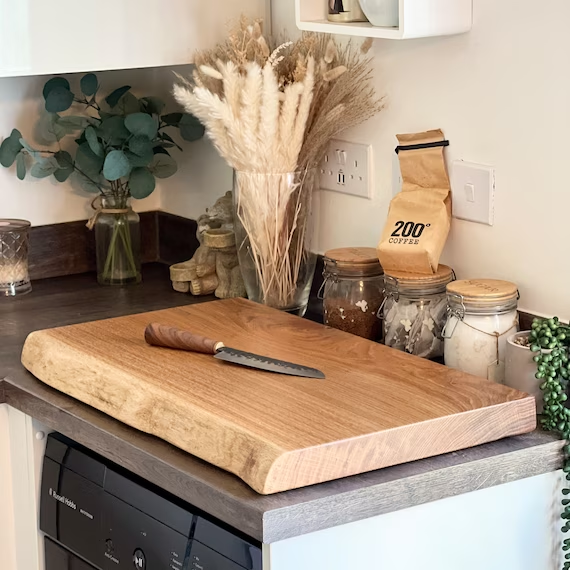
How to Take Excellent Care of Your Cutting Board
Proper maintenance will keep your board clean and clear of cracks, regardless of whether it is a classic maple or a more recent replacement:
To organically disinfect, scrub it with hot water and a solution of lemon juice, kosher salt, or baking soda after each use.
To avoid moisture damage, make sure everything is completely dried.

Every few weeks, condition the wood with food-grade mineral oil to maintain its finish and stop it from drying out or splitting.
Your board will stay in excellent condition and be prepared for your next loaf if you follow these easy measures.
Reintroducing Breadmaking in the Household
Interest in baking at home has increased dramatically since the outbreak.
Making bread is becoming more popular than ever, and in the process, people are rediscovering the original use for their pull-out cutting boards.
Becca Beach, a well-known advocate in the breadmaking world, provides YouTube instructions that make baking simple and enjoyable, even for novices.
Her “Homemade Bread – SUPER Easy and Delicious!” video takes viewers step-by-step through the entire procedure.
Why Make Your Own Bread?
It’s healthy since you don’t use additives, preservatives, or extra salt or sugar.
It’s less expensive: Several loaves can be made from a few basic cupboard items.

It’s incredibly fulfilling: Nothing compares to the aroma of freshly baked bread filling your kitchen.
The best part is that the ideal surface for getting started is already beneath your countertop.
In conclusion, a forgotten tool that is poised for a resurgence
That simple pull-out cutting board is a nod to heritage rather than merely being an afterthought in your kitchen design.
It can become the focal point of your home baking endeavors with a little care and a dusting of flour.
Therefore, take a moment before using it to cut a tomato.
Perhaps it’s time to dust off the flour, get your hands dirty, and bake a loaf of bread the way it was intended to be made.
Take it out and make something lovely, please. 🍞


