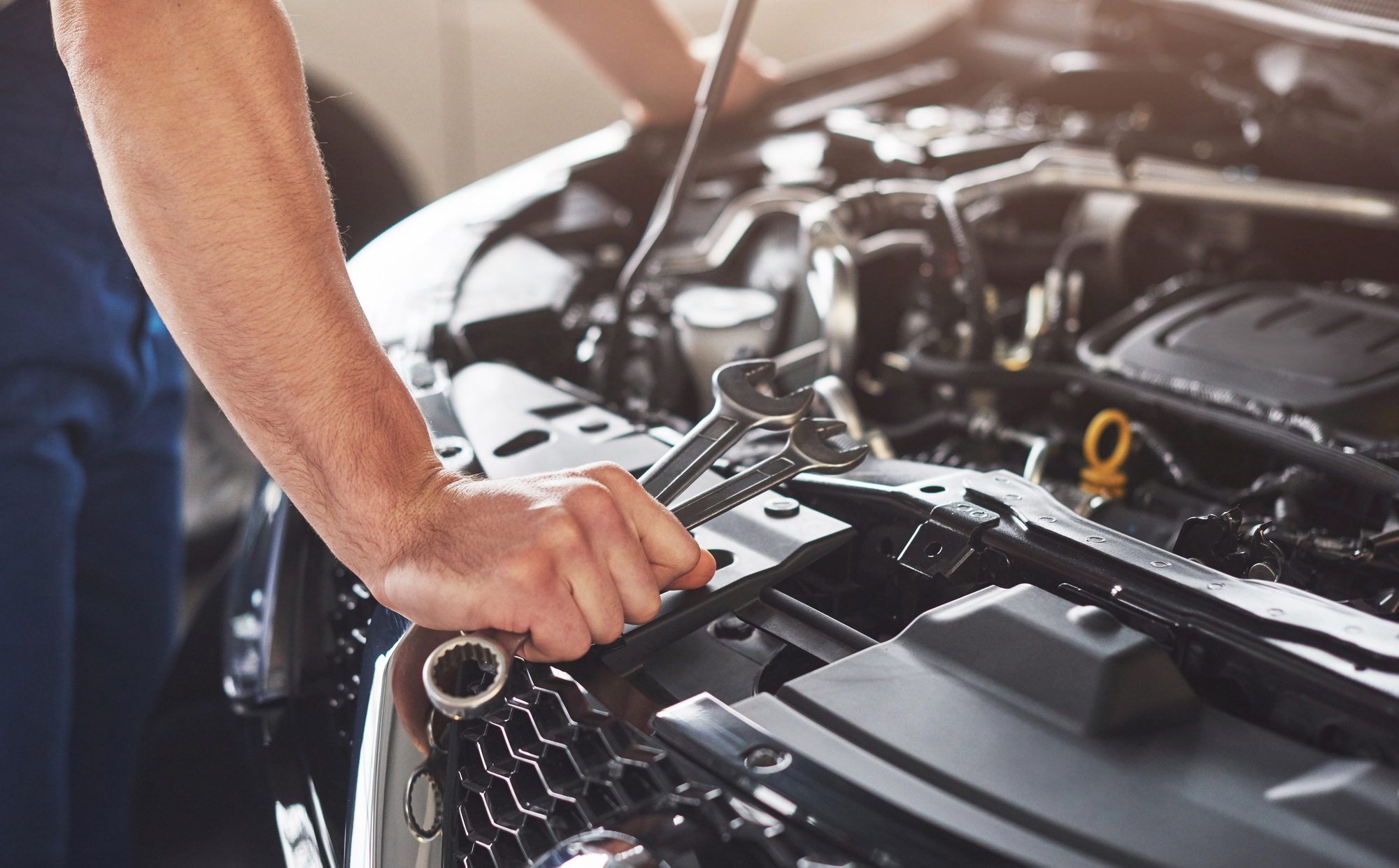
A Mechanic Told My 74-Year-Old Mom She Wouldn’t Understand the $3,800 Repair Bill

The squeak started in September.
My mother called me on a Sunday night to tell me about it. She calls every Sunday at seven. She has since I left for college thirty-one years ago. You could set a clock by her.
“It’s the Buick,” she said. “There’s a little squeak when I brake. Front end. Left side, I think.”
“How bad?”
“Not bad. Just a squeak. Like a mouse.”
“Mom, you should get it looked at.”

“I’m going to. Ray’s place, in town. Next week.” She paused. “But my knee’s acting up again. I don’t love driving on it right now. The clutch on the—” She stopped. “The brake. Pushing the brake. It hurts.”
“I’ll drive you,” I said. “I’ll come down Thursday.”
“You don’t have to do that, Beth.”
“I want to.”
That was true. But it was also true that I worried about her. More every year. She was seventy-four. She lived alone in the house I grew up in, a white farmhouse on eleven acres outside Harlan Falls, Pennsylvania. Sixty miles from the nearest hospital. Sixty miles from me. My father had been gone
four years. Her knee was bad. Her eyes weren’t great at night. And her car was a 2009 Buick LaCrosse with a hundred and forty thousand miles on it.
Every time the phone rang at a strange hour, my stomach dropped.
So I drove down Thursday morning. Two and a half hours from Pittsburgh. She was waiting on the porch in her gray cardigan with her purse on her lap, like she’d been sitting there since dawn. She probably had.
“You didn’t have to come,” she said, climbing into my passenger seat with a small grunt of pain.
“Yes, I did.”
She patted my hand. “Thank you, sweetheart.”
My mother’s name is Helen Brooks.
She’s five foot three. She has short white hair she cuts herself in the bathroom mirror, and reading glasses she loses on top of her head at least twice a day. She wears sensible shoes and
cardigans with tissues in the sleeves. She makes the best apple pie in Harlan County and she has never, to my knowledge, raised her voice in public.
People underestimate her. They always have.
I did too. For fifty-two years.
I just didn’t know it yet.
Ray’s Auto Repair is on Main Street, at the edge of town, between the feed store and the old
movie theater that closed in 1998. It’s been there as long as I can remember. A cinder block building painted white, with two service bays and a small office with a big window. A faded red sign over the door.
RAY’S AUTO REPAIR. HONEST WORK. SINCE 1971.
My father took our cars there my whole childhood. Every oil change. Every inspection. Every winter tire swap. Dad would drive the car in, chat with Ray for twenty minutes about the weather and the
Steelers, and come home.
At least, that’s how I remembered it.
I helped my mother out of the car in the gravel lot. Her knee was swollen that week. She’d
wrapped it in an elastic bandage under her slacks. She leaned on my arm all the way to the office door.
Inside, it smelled like motor oil and old coffee. There was a counter with a computer on it. A rack
of air fresheners shaped like pine trees. A calendar from an auto parts company, still on August. A coffee maker with a half-burned pot. And a bulletin board covered in faded business cards and photos of customers’ cars.
There was nobody behind the counter.
“Hello?” I called.
A door at the back opened into the service bay. Loud music. The whine of an air compressor. Somebody yelled, “Be right there!”
We sat down in two plastic chairs by the window. My mother folded her hands on her purse.
“Ray’s getting old,” she said quietly, looking around. “The place didn’t used to look like this.”
“Like what?”
“Tired,” she said.
We’d brought the car in for a squeak. That was all. A little squeak when she braked.
The young man who took the keys had a name patch on his blue work shirt that said TRAVIS.

He couldn’t have been twenty-five. He was tall and broad-shouldered, with a buzz cut and a little goatee and a silver chain around his neck. He had an earpiece in one ear. He took my mother’s keys without looking at her.
“What’s it doing?”
“A squeak when I brake,” my mother said. “Front left. It started about three weeks ago. Only when the car’s warmed up. Only at slow speeds. It goes away when I brake hard.”
Travis nodded vaguely. He was looking at his phone.
“Okay. We’ll take a look. Give us an hour.”
He disappeared into the bay.
We waited forty minutes. My mother read a three-year-old copy of Field & Stream from the side table. I answered work emails on my phone. I’m a project manager for a hospital system in Pittsburgh. My job is mostly emails.
Through the office window, I could see the Buick up on the lift in the second bay. Travis and another young man, a skinny kid with a ponytail, were walking around underneath it. Travis was pointing at things. The skinny kid was nodding.
My mother put down her magazine and watched them through the glass. She watched for a long time. She didn’t say anything.
But I noticed her mouth go tight.
Then Travis came out of the bay wiping his hands on a red rag.
“Okay,” he said. “So. It’s not good.”
He didn’t look at my mother. He looked at me.
I remember that. I remember it clearly now. At the time, I didn’t think anything of it. My mother was sitting right there. It was her car. She’d brought it in. She’d described the problem.
But he stood in front of us and talked only to me, the way you’d talk to the parent of a small
child.
“Brakes front and back,” he said, counting on his fingers. “Rotors. Calipers. Ball joints are shot. Tie
rod ends.”
My stomach dropped.
“How much?” I asked.
He looked at a clipboard.
“Thirty-eight hundred, give or take.”
Thirty-eight hundred dollars.
For a squeak.
“Both front calipers?” my mother asked.
It was a quiet question. Polite. Like she was asking about the weather.
Travis turned his head and looked at her for the first time. He smiled at her. The way you smile at a child who asks where clouds go.
“Ma’am,” he said, “you wouldn’t understand if I explained it.”
My mother didn’t say anything. She just looked at him.
Here is what I’m not proud of.
I was going to pay it.
My card was already halfway out of my purse. My fingers were on it. I wasn’t even thinking. Thirty-eight hundred dollars was a lot of money. But I had it. And my mother didn’t. Her whole pension was nineteen hundred a month.
And all I could think about was her. Alone. On a dark road sixty miles from anywhere. In a car with brakes that didn’t work and ball joints that were shot. Whatever ball joints were.
I wanted that car safe.
I didn’t even ask a question. I didn’t ask to see the parts. I didn’t ask for a second opinion. I didn’t ask what a tie rod end was. I just reached for my card, because a man in a work shirt with grease on his hands told me something was broken, and I believed him.
And because he’d looked at me instead of my mother, I’d let him.
My mother put two fingers on my wrist.
That was all.
Just two fingers. Light as a feather. Resting on the inside of my wrist, right over the pulse.
She didn’t look at me. She didn’t say a word. She kept her eyes on Travis.
But I knew that touch. I’d known it my whole life. That was the touch she used in church when I was

fidgeting. In the grocery store when I reached for a candy bar. At the dinner table when my father started talking politics with my uncle. Two fingers on the wrist.
Wait.
I put the card back.
“Would you write it down for me?” my mother said to Travis. “Every part. And the price next to it.”
Travis sighed like she’d asked him to carry her groceries.
“It’s all in the computer, ma’am. I can print you a summary.”
“I’d like it written out, please. By hand. Each part on its own line. And the labor separate. If you don’t mind.”
He looked at me. I didn’t say anything. I’d learned my lesson about thirty seconds earlier.
He shrugged. He grabbed a work order pad from the counter and a pen from his shirt pocket. He wrote it. Fast. Scrawling.
I watched over his shoulder.
Front brake pads — $189
Rear brake pads — $179
Front rotors (2) — $420
Rear rotors (2) — $380
Front calipers (2) — $640
Upper ball joints (2) — $510
Lower ball joints (2) — $490
Outer tie rod ends (2) — $340
Alignment — $149
Labor — $512
Shop supplies — $45
He circled the total at the bottom. $3,854.
He tore off the sheet and handed it to my mother.
She took it. She held it at arm’s length and squinted at it. Then she took her reading glasses off the top of her head, put them on, and read it again. Slowly. Line by line. Her lips moved a little as
she read.
Then she folded it in half. Then in half again. She put it in her purse and snapped the clasp shut.
“Thank you,” she said.
“So you want us to go ahead?” Travis said. “We could get started today. I’d need a deposit.”
“Is Ray in today?”
His pen stopped.
It was just for a second. A tiny pause. But I saw it. And I saw my mother see it.
“Ray doesn’t really come in anymore,” Travis said.
“His name’s on the sign.”
“Tuesdays and Fridays, mostly. He’s kind of retired. I run things now.”
“I see,” my mother said. “Then I’ll come back Friday.”
“Ma’am, honestly, I wouldn’t drive it. Those ball joints could go anytime. If the lower ball joint fails at speed, the wheel can fold right under the car. You could lose control.”
My heart jumped into my throat.
“Mom,” I said. “Maybe we should—”
Two fingers on my wrist again.
“I’ll drive slowly,” my mother said pleasantly. She stood up, leaning on my arm. “I’ll come back Friday. Please give me my keys.”
Travis looked at her for a long moment. Something moved across his face. Annoyance, maybe.
Or something else. Something closer to nervous.
He handed her the keys.
I drove the Buick home. My mother insisted. She said her knee hurt too much, and besides, she wanted me to feel the brakes.
“Feel them,” she said. “Just pay attention.”
I paid attention. The brakes felt fine. Maybe a little soft. There was the squeak, just like she’d said. A thin, high chirp when I slowed down for the light on Main Street. Like a mouse.
“Mom, what if he’s right? What if the wheel falls off?”
“The wheel’s not going to fall off.”
“How do you know?”
She didn’t answer. She was looking out the window at the cornfields going by.
On the drive home, she rolled her window down at the stop sign at Miller Road. The one at the bottom of the hill, by the old church. It was cold out. October. The air smelled like leaves and
woodsmoke.
“Stop here for a minute,” she said. “Put it in park.”
“Mom, there’s—”
“Nobody’s coming, Beth. Look. We’re the only car for five miles. Put it in park.”
I put it in park.
She closed her eyes.
She sat there with her eyes closed and her head tilted toward the open window, listening to the engine idle. Just listening. Her face was perfectly still. Her hand was resting flat on the dashboard, her palm pressed against it, like she was feeling for a heartbeat.

I didn’t say anything. I didn’t know what she was doing.
After a long minute, she opened her eyes.
Then she laughed once. Through her nose. A short, dry sound.
“Ball joints,” she said.
That’s all she said. She rolled the window back up.
“Okay,” she said. “You can go.”
I didn’t understand it then. I asked her about it later, and she told me.
“Ball joints don’t make any noise sitting still,” she said. “They’re suspension. They talk to you on bumps. On turns. If they’re really worn out, you’ll hear a clunk when you go over a pothole, or feel
it in the steering wheel. Shaky. Loose. Like the car’s wandering. I’ve been driving this car for twelve years. It doesn’t wander. And it doesn’t clunk.”
“Then why did you listen to the engine?”
“To see if anything else was wrong,” she said. “That boy was sure there was something wrong. I wanted to make sure he wasn’t right by accident.”
“Was he?”
“No,” she said. “The engine sounds like it always does. A little tired. But fine.”
That conversation came later. At the stop sign, I just stared at her.
“Mom. What’s going on?”
“Nothing, sweetheart. Drive home. I want to make a pie.”
I need to tell you about my father.
His name was Walt Brooks. He was a high school history teacher in Harlan Falls for thirty-six years. He was tall and quiet, with big glasses and a laugh like a foghorn. He loved the Civil War, the Steelers, and my mother, in that order. Maybe not in that order.
He could tell you the troop movements at Gettysburg hour by hour. He could quote Lincoln from memory.
He couldn’t change a tire to save his life.
I’m serious. I watched him try once, when I was eleven. We got a flat on the turnpike, coming home from my grandmother’s. He got out the jack and the spare and spent forty-five minutes on the side of the road, swearing and sweating. He put the jack in the wrong place and dented the
door. He cross-threaded two of the lug nuts.
My mother sat in the passenger seat the whole time, doing a crossword puzzle.
Eventually, a state trooper stopped and changed it for us.
But here’s the thing I never thought about. Not once. Not in fifty-two years.
In forty years of marriage, my parents’ cars never once broke down.
Not one time. Never. Not on the highway. Not in a snowstorm. Not in the driveway on a cold
morning. Our cars always started. They always ran. They never overheated or stalled or got a flat they couldn’t explain. My friends’ parents were always on the side of the road somewhere, with the hood up. Not us.
I assumed it was luck. Or Ray’s Auto Repair.
I never wondered who kept them running.
I stayed overnight. I’d planned to drive back to Pittsburgh that afternoon, but I didn’t like leaving
her alone with a car a mechanic said might fold under her at any moment.
“It’s not going to fold,” my mother said again, rolling out pie dough at the kitchen counter.
“You don’t know that.”
She didn’t answer. She just smiled a little and kept rolling.
We ate dinner. We watched a game show. She went to bed at nine-thirty like always. I stayed up in my old bedroom answering emails.
At eleven-fifteen, I heard the back door open.
I went to the window. The garage light was on. The big detached garage behind the house, the one my father built in 1979. The one he used for storing lawn furniture and Christmas decorations
and the old canoe nobody ever used.
The light was on.
I put on my shoes and my coat and went out into the cold.
The side door of the garage was open a crack. I pushed it open.
My mother was lying on her back on a mechanic’s creeper under the front of the Buick.
A creeper. One of those flat rolling boards on little wheels. Dark red, worn smooth with age. She was lying on it in her flannel nightgown and her gray cardigan and a pair of my father’s old work
boots. She had a flashlight in her mouth. Her bad leg was stretched out flat. The front of the car was up on two heavy steel jack stands I’d never seen before in my life.
The front left wheel was off. It was leaning against the workbench.
“Mom?”
She pulled the flashlight out of her mouth. She didn’t seem surprised to see me.
“Hand me that light, will you, sweetheart? The big one. On the bench.”
I stood there with my mouth open.
“Mom. What are you doing?”
“Looking at my brakes,” she said. “The light, Beth. Please.”
I handed her the big work light from the bench. She clipped it to the underside of the car. She slid
herself further under, wincing a little when her knee bent.
“Your knee—”
“My knee is fine lying down. It’s standing that hurts.” Her voice came out muffled from under the
car. “Come look at this.”
I knelt down on the cold concrete floor. I peered under the car.
She was pointing at the brake. I could see the round silver disc of the rotor. The big metal clamp

that went around it.
“That’s the caliper,” she said, tapping it. “That’s what squeezes the pads against the rotor to stop the car. If it was failing, you’d see fluid leaking here, around the piston. Or the car would pull to one side when you braked. Or the pad would be worn way down on one side and not the other.” She ran her finger along the edge of the caliper. “Dry. Clean. No leak. Pistons moving freely. This
caliper’s fine.”
I stared at her.
“Now look here.” She shone the light on the brake pad, the flat piece inside the caliper, pressed
against the rotor. “See that little metal tab? Sticking out of the pad, right there?”
I squinted. There was a tiny sliver of bent metal sticking out the side.
“That’s a wear indicator,” she said. “When the pad gets thin enough, that little tab touches the
rotor and squeaks. That’s its whole job. To squeak. To tell you it’s time for new pads.” She tapped it with her fingernail. “That’s your mouse.”
“That’s it?”
“That’s it. Front pads are low. Not gone. Low. Maybe three millimeters left. Rotors are fine. A little worn, but well within spec. No grooves. No warping.” She slid out from under the car and sat up on the creeper, breathing hard. “Rear pads have plenty of life left. I checked those an hour ago.”
“An hour ago?”
“I’ve been out here since ten.” She wiped her hands on a rag from her cardigan pocket. “Ball joints are tight. I put a pry bar on them. No play at all. Tie rod ends are fine too. Good boots, no
looseness.”
She looked up at me.
“That squeak is a sixty-dollar set of front pads, Beth. Maybe ninety, if you want the good ones.
Forty-five minutes of labor. That’s it.”
I sat down on the cold floor.
“Thirty-eight hundred dollars,” I said.
“Thirty-eight hundred and fifty-four,” my mother said.
I looked around the garage. Really looked. For the first time in my life.
The garage my father built. The garage I’d thought held nothing but lawn chairs and Christmas lights.
The lawn chairs were there. The Christmas lights were there, in their plastic bins. The canoe was
hanging from the rafters.
But along the back wall, behind a canvas tarp that was now folded on the floor, there was a workbench. A real one. Heavy oak, scarred and stained with fifty years of oil. Above it, a
pegboard covered in tools. Wrenches in every size, hung in perfect order from smallest to largest. Sockets in labeled rows. Screwdrivers. Pliers. A torque wrench in a long wooden case. A timing light. A set of feeler gauges. Tools I didn’t even have names for.
There was a red rolling toolbox, the tall kind with a dozen drawers, standing in the corner. It was old. The paint was chipped. On the front, in faded white letters, someone had stenciled a name.
NOVAK’S GARAGE.
Novak.
My mother’s maiden name.
“Mom,” I said slowly. “Whose tools are these?”
She looked at the pegboard. At the red toolbox. At the creeper she was sitting on.
She didn’t answer for a long moment.
“Mine,” she finally said.
I made us both cocoa. We sat at the kitchen table at midnight, her with her bad leg up on a chair and a bag of frozen peas on her knee. I had about a thousand questions.
She held up her hand before I could ask any of them.
“I’ll tell you,” she said. “But you have to let me tell it my way. From the start.”
“Okay.”
She wrapped her hands around her mug.
“My father had a garage,” she said. “In town. Right on Main Street. Novak’s Garage. You’ve driven past it a thousand times.”
I frowned. “Where?”
She looked at me.
“Beth. Where do you think Ray’s Auto Repair is?”
My grandfather was Frank Novak. I never knew him. He died before I was born.
He came over from Slovakia in 1938 with eleven dollars and a wrench. He opened a garage in Harlan Falls in 1946, after the war. Two service bays. White cinder block. A little office with a big
window.
He had one child. A daughter. Helen.
“I grew up in that garage,” my mother said. “My mother died when I was four. Pneumonia. There
was nobody to watch me. So my father brought me to work. Every day. He’d sit me on an overturned oil drum in the corner of the bay with a coloring book. I was supposed to stay there.”
She smiled into her cocoa.
“I never stayed there.”
By the time she was seven, she was handing her father tools. She knew the difference between a 9/16 and a 5/8 wrench by feel, with her eyes closed. By ten, she was changing oil. By twelve, she
could pull a carburetor apart and put it back together faster than her father’s hired man.
“I could hear things,” she said. “That was the gift. My father always said so. I could stand next to a car with the engine running and close my eyes and tell you what was wrong with it. A lifter ticking.
A belt slipping. A bad bearing in the water pump. I just heard it. Like music. Like a wrong note in a song.”
By the time she was sixteen, my mother was the best mechanic in Harlan County.
She’d have told you that’s an exaggeration. It’s not. I’ve since talked to people who were there. Old men. Farmers. They all said the same thing. Frank’s girl. Little Helen. She could fix anything with an engine.

“But nobody would let her,” I said.
“Oh, they let me,” my mother said. “As long as my father was standing next to me. As long as they thought it was him.”
“Ray came along when I was sixteen,” my mother said.
Raymond Delancey was fifteen. A skinny, angry farm kid from out on Route 9. His father drank. His mother had left. He’d been kicked out of school for fighting. The county sheriff, who was a friend
of my grandfather’s, brought him into the garage one afternoon by the scruff of his neck.
“Frank,” the sheriff said. “This one needs something to do with his hands besides punching people. Can you use him?”
My grandfather looked at Ray for a long time. Then he pointed at his daughter.
“Helen’s going to teach you,” he said. “Do what she says.”
Ray stared at her. A sixteen-year-old girl in coveralls with a ponytail and grease on her nose.
“A girl?”
My mother laughed, telling me. “That was the first thing he ever said to me. A girl? Like I was a talking dog.”
“What did you do?”
“I handed him a wrench,” she said. “And I told him to take the oil pan off a ‘49 Ford. He couldn’t do it. He didn’t even know where it was. Then I took the oil pan off. In four minutes. With one
hand. While I ate a sandwich with the other.” She grinned. “He never said a girl again.”
She taught Ray everything. For six years. Every engine. Every transmission. Every brake system. She taught him how to listen. How to close his eyes and feel the car through his hands.
“He was good,” she said. “Not as good as me. But good. Honest. He worked hard. He loved those cars. And he loved my father. Frank was the only man who’d ever been decent to him.”
Then, in 1970, my grandfather had a stroke.
He was sixty-one. He was in the bay, working under a truck, and he just stopped. My mother found him. She was twenty-one.
He lived. But his right side never worked properly again. He couldn’t hold a wrench. He couldn’t
drive. He could barely walk.
“Somebody had to run the garage,” my mother said. “And I was the obvious choice. I was better than anybody in the county. Everybody knew it. Even if they didn’t say it.”
She went to the bank in Harlan Falls. The First National. She needed a small business loan. Just enough to keep the garage running while her father recovered. To pay Ray. To buy parts. To get through the winter.
“I wore my mother’s good dress,” she said quietly. “I’d never worn a dress in the garage in my life. I brought the books. All the receipts. Twenty-four years of my father’s business. Every dollar. I’d been keeping them since I was fourteen.”
The bank manager was a man named Hollis. He’d known her since she was a baby. He brought his own car to Novak’s every spring for a tune-up. He’d watched her do it.
He looked at her books. He looked at her. He closed the folder.
“Helen,” he said. “Honey. You know I can’t do that.”
“Why not?”
“A girl can’t run a garage,” he said. “Nobody’s going to bring their car to a girl. Not around here.
And the board won’t lend to an unmarried woman for a business. You know that. Without a husband to cosign—”
“I fixed your car last April,” she said. “You said it never ran better.”
“That was your daddy’s garage,” Hollis said. “Your daddy was standing right there.”
“He was standing there. I was fixing it.”
Hollis smiled at her. Kindly. The way you smile at a child who asks where clouds go.
“Helen,” he said. “You wouldn’t understand how business works.”
My mother stopped telling the story for a minute.
She looked down at her cocoa. It had gone cold. She didn’t drink it.
“That’s what he said,” she said quietly. “Fifty-three years ago. You wouldn’t understand.”
I put my hand over hers.
“And on Thursday,” I said, “that boy—”
“Said almost the exact same thing,” she said. “In almost the exact same building.”
She tried other banks. Two in neighboring towns. Same answer. She tried to keep the garage running without a loan, for six months, working alone. Customers came. Some of them. The ones
who’d known her since she was little and didn’t care.
But most of them didn’t. The farmers took their trucks to the Ford dealer in Carlisle instead. The town people went to the new Sunoco station out on the highway. Word got around. Frank’s had
a stroke. The girl’s running it now. I don’t know. I’d rather not risk it.
By the spring of 1971, Novak’s Garage was going under.
“And Ray?” I asked.
“Ray stayed,” she said. “Every day. For no pay, most months. He slept on a cot in the back office some nights because he didn’t have anywhere else to go. He’d tell customers he did the work, so they’d let me do it.”
She smiled a little.
“He’d stand next to me. Like my father used to. So they’d think it was him.”
In June of 1971, my grandfather called them both into the little office with the big window.

He was in a wheelchair by then. He couldn’t speak clearly anymore. But he’d written something out. In his left hand, in big, shaky block letters, on the back of a pink work order from a pad on the desk.
He handed it to Ray.
Ray read it. Then he handed it to my mother.
I SELL THIS GARAGE TO RAYMOND DELANCEY FOR ONE DOLLAR.
ON ONE CONDITION.
NEVER CHARGE FOR WHAT ISN’T BROKEN.
NEVER TALK DOWN TO A CUSTOMER.
AND ALWAYS LISTEN TO HELEN.
— FRANK NOVAK
Ray looked at my mother. My mother looked at her father.
“Papa,” she said. “No. It’s ours.”
My grandfather shook his head slowly. He pointed at her. Then at Ray. Then he made a motion with his good hand, pulling something along. Together.
“He knew,” my mother said quietly. “He knew they’d never let me have it. Not in this town. Not in 1971. Not with my name on the sign. But with Ray’s name, they’d come back. And as long as Ray was there, I could still work. Behind him. Beside him. Wherever.”
Ray reached into his pocket. He pulled out a crumpled dollar bill. He smoothed it flat on the desk and slid it across to my grandfather.
My grandfather pushed it back.
“Give it to Helen,” he said. Slurred, but clear enough.
Ray handed the dollar bill to my mother.
“I’ll keep it honest, Helen,” he said. “I swear to God. I’ll keep it honest. And it’s always yours.
Whenever you want it.”
She folded that dollar bill into the pink work order. And she kept it.
For fifty-three years.
The sign went up two weeks later. White letters on red.
RAY’S AUTO REPAIR. HONEST WORK. SINCE 1971.
“Why didn’t you keep working there?” I asked. “With Ray?”
“I did,” she said. “For a year. Then I met your father.”
Walt Brooks was the new history teacher at Harlan Falls High. He drove a 1964 Plymouth Valiant that made a horrible grinding sound every time he shifted gears. He brought it to Ray’s in the fall
of 1971.
Ray was out sick that day. My mother was alone in the bay.
“He walked in and saw me under a truck,” she said, smiling. “He asked if the mechanic was in. I said,
You’re looking at her. And he said—”
She stopped. Her eyes were shining.
“He said, Oh, thank God. I was afraid it would be a man who’d make me feel stupid.”
I laughed. I couldn’t help it. That was exactly my father.
“He watched me fix his clutch,” she said. “He asked questions the whole time. Real questions. He wanted to know how it worked. Not like the bank manager. Not like the customers who looked
through me. He looked at me like I was the most interesting thing he’d ever seen.”
They were married eight months later.
“And then what?”
My mother sighed.
“And then, Beth, it was 1972. A married woman working under cars in a garage. In Harlan Falls.” She shook her head. “People talked. Ray started losing customers again. The church ladies said things.
Your father’s principal called him into his office and asked if his wife was quite right in the head.”
“You quit.”
“I quit.” She looked out the dark kitchen window. “Officially.”
Officially.
That’s the word that stuck with me.
My father built the garage behind the house in 1979. I was six. I remember it going up. I
remember him swearing at the instructions and hitting his thumb with a hammer.
“He built it for me,” my mother said. “Not for lawn chairs.”
For forty years, my mother fixed every car our family owned.
At night. On weekends. When I was at school or asleep. In that garage, behind a canvas tarp, with her father’s tools and her father’s red toolbox and her father’s creeper.
Oil changes. Brakes. Tune-ups. A transmission rebuild on our old station wagon in 1986. A whole
new clutch in Dad’s pickup. Timing belts. Water pumps. Alternators. Every winter, she’d check every hose and belt and battery before the first snow. Every spring, she’d rotate the tires.
“That’s why they never broke down,” I whispered.
“That’s why they never broke down.”
“And Dad?”
“Your father,” my mother said, with so much tenderness I had to look away, “took every car to
Ray’s every few months and chatted for twenty minutes about the Steelers, so the whole town would think Ray was keeping our cars running. And Ray let them think it.”
“Why?”
“So nobody would ask questions.” She smiled. “So nobody would call your father’s principal again. So I could just do what I loved, quietly, and nobody would make it into a scandal.”
She paused.

“Your father used to sit on an upside-down bucket in the garage and read to me while I worked. History books. Civil War. Out loud. For hours. He’d hand me tools. He was terrible at it. He never knew which wrench was which. I’d say nine-sixteenths and he’d hand me a screwdriver.” She laughed
softly. “Forty years, and he never learned. He didn’t need to. He was there.”
I put my face in my hands.
Fifty-two years. Fifty-two years of thinking my mother was a quiet woman who made pies and did
crossword puzzles. Fifty-two years of thinking my father was the one who handled things.
I never wondered who kept them running.
“Why didn’t you ever tell me?” I asked.
My mother looked at me for a long time.
“You never asked,” she said gently. “And by the time you were old enough to understand, it didn’t seem to matter anymore. It was just how things were.”
“It matters, Mom.”
“I know that now,” she said. “I think I knew it on Thursday. When that boy looked at you instead of me.”
Friday morning, she wore her church coat.
Navy blue wool. Brass buttons. The one she only wore for funerals and Easter. She put on her pearl earrings. She combed her white hair carefully in the hall mirror.
She carried the estimate in her purse.
And she carried something wrapped in an old dish towel.
It was a faded yellow towel with little embroidered roosters on it. I remembered it from my
grandmother’s kitchen, from photos. My mother held it in both hands, carefully, the way you’d hold something heavy and precious.
“What’s that?” I asked.
“You’ll see.”
I drove the Buick. Slowly. My mother insisted it was perfectly safe. The squeak chirped at every
stop sign, like it was laughing.
The gravel lot at Ray’s had an old blue Chevy pickup parked by the office door. Rust on the wheel wells. A tool rack in the bed.
“He’s here,” my mother said quietly.
She sat in the car for a moment. Just sat. Looking at the faded red sign over the door.
RAY’S AUTO REPAIR. HONEST WORK. SINCE 1971.
“Mom? You okay?”
“I haven’t been inside that office in fifty years,” she said. “Not since the day I quit. I always waited in the car. Or your father went in.” She took a breath. “Ray and I haven’t really talked in a long time.
A nod at the grocery store. A card at Christmas. A wave at your father’s funeral.”
“Why?”
“It hurt too much,” she said simply. “Seeing my father’s garage with somebody else’s name on it.
Even somebody I loved like a brother.”
She opened the door. I helped her out. She took my arm. We walked to the office.
Travis was behind the counter. When he saw my mother walk in, his face went a little pale. He
glanced toward a closed door in the back of the office.
“Ma’am. Good morning. Did you want to go ahead with the—”
“I’d like to see Ray, please,” my mother said.
“He’s busy right now. I can help you.”
“No,” my mother said pleasantly. “You can’t.”
She walked past him. Right past the counter. To the closed door at the back.
She knocked twice.
“Yeah?” A rough voice from inside. Old. Gravelly.
She opened the door.
Ray was at his desk.
It was a small office. Wood paneling. A gray metal desk piled with papers. A coffee mug that said WORLD’S OKAYEST GRANDPA. A window looking out at the service bays.
And on the wall behind the desk, in a cheap black frame, a faded photograph. Black and white. A cinder block garage. A man in coveralls with a big mustache. A skinny teenage boy with a scowl. And a girl about sixteen with a ponytail and grease on her nose, holding a wrench like a trophy.
Ray was seventy if he was a day. More, maybe. Bald on top, white hair around the sides. Reading glasses. Big, scarred hands with knuckles like walnuts. A blue work shirt with RAY stitched on the pocket, faded nearly white from a thousand washings.
He looked up from his papers.
He saw my mother standing in the doorway in her navy church coat.
His face changed.
He stood up slowly. His chair scraped against the floor.
“Helen,” he said.
“Hello, Ray.”
They looked at each other for a long moment. Neither of them said anything. Fifty years of nods at the grocery store, all in that one look.
“Sit down,” Ray said finally. His voice was rough. “Please. Sit.”
My mother sat down in the chair across from his desk. I stood behind her.
She opened her purse. She took out the folded estimate. She unfolded it and smoothed it flat on the desk and slid it across to him.

Ray picked it up. He put on his reading glasses.
He read the estimate all the way to the bottom.
I watched his face. It didn’t move at first. Then, line by line, it started to change. His jaw tightened.
A muscle jumped in his cheek. By the time he got to the bottom, to the circled total, his face had gone a deep, dark red.
He set the estimate down on the desk. He didn’t say anything.
Then my mother unwrapped the dish towel and set it in front of him.
It was a wrench.
An old combination wrench. Nine-sixteenths. The chrome had worn off the handle long ago. The
steel underneath was dark and smooth from decades of hands. Someone had stamped letters into the handle with a metal punch, deep and uneven.
F. NOVAK.
And tucked under the wrench, folded into a tight square, was a small pink piece of paper. A work order, faded to the color of old skin. My mother unfolded it carefully and laid it flat next to the wrench.
Shaky block letters, written left-handed.
I SELL THIS GARAGE TO RAYMOND DELANCEY FOR ONE DOLLAR.
ON ONE CONDITION.
NEVER CHARGE FOR WHAT ISN’T BROKEN.
NEVER TALK DOWN TO A CUSTOMER.
AND ALWAYS LISTEN TO HELEN.
— FRANK NOVAK
And folded inside it, so old it was soft as cloth, a single dollar bill.
Ray looked at it a long time.
He didn’t touch it. He just looked. At the wrench. At the pink paper. At the dollar.
His big scarred hands were resting flat on the desk on either side of it. I watched them start to shake.
Then he got up and shut the office door.
He shut it quietly. Then he stood with his hand on the knob and his back to us for a long moment.
When he turned around, his eyes were wet.
“His nine-sixteenths,” he said hoarsely. “You kept his nine-sixteenths.”
“I kept all of it,” my mother said.
Ray sat back down heavily. He reached out and touched the wrench. Just one finger, on the stamped letters. F. NOVAK.
“He used to throw this at me,” Ray said, almost laughing. “When I was sixteen and doing
something stupid. Never hit me. Hit the wall right next to my head. Every time.” He swallowed. “Best man I ever knew.”
“I know.”
Ray looked down at the estimate. Then up at my mother.
“Tell me what it really needs,” he said quietly.
“Front pads,” my mother said. “Wear indicator on the left. Three millimeters left. Rotors in spec.
Calipers dry, pistons free. Ball joints tight. I put a bar on them Thursday night. No play. Tie rods are fine. Rear pads have half their life left.” She paused. “Sixty dollars in parts, Ray. Forty-five minutes of labor.”
Ray closed his eyes.
“And he told me,” my mother said, “that I wouldn’t understand if he explained it.”
Ray’s eyes snapped open.
“He said that?”
“He said it to me. He said everything else to my daughter.”
Ray looked at me for the first time. I nodded. I didn’t trust myself to speak.
He sat there for a long time without saying anything. Then he took off his reading glasses and rubbed his face with both hands.
“He’s my grandson,” Ray said.
I’d guessed. I think my mother had too. The same broad shoulders. The same jaw.
“My daughter’s boy,” Ray said. “His father took off when he was little. Like mine did. I took him in when he was fourteen. Taught him the trade. Just like you taught me.” He looked at my mother.

“He’s good, Helen. He’s got good hands. Not good ears. But good hands.”
“Then why is he doing this?”
Ray picked up the estimate again. He read it one more time. I watched something hard and cold
settle over his face.
“I don’t know,” he said. “But I’m going to find out.”
He stood up. He opened the office door.
“Travis,” he called. “Get in here.”
Travis came into the office slowly. He looked at my mother in her church coat. At me. At his grandfather. At the estimate on the desk.
At the wrench.
“Close the door,” Ray said.
Travis closed it.
“This lady,” Ray said, pointing at my mother, “is Helen Novak. Brooks, now. Her father built this garage. With his own hands. In 1946. She taught me everything I know about cars. Everything. And everything I know, I taught you.” He tapped the wrench. “This was her father’s. This is where all of it
came from. This garage. This trade. You. Me.”
Travis looked at the wrench. His face was very pale.
“She brought her car in on Thursday for a squeak,” Ray said. “And you wrote her up for thirty-
eight hundred dollars.”
“Grandpa, it needs—”
“Don’t.” Ray’s voice was quiet. Deadly quiet. “Don’t lie to me in front of her. She’s already been
under the car. She knows exactly what it needs. She knew before she got here. She probably knew when she drove in.”
Travis’s mouth closed.
“And then,” Ray said, “you told her she wouldn’t understand if you explained it.”
Travis looked at the floor.
“Did you say that, son?”
A long silence.
“Yes, sir,” Travis said quietly.
Ray sat back down. He looked very old suddenly.
“How many?” he said.
“What?”
“How many, Travis?” Ray turned his chair around to the computer on the side of his desk. He
tapped the keyboard. A screen came up. Rows of names and numbers. “How many estimates like this? How many old ladies?”
Travis didn’t answer.
Ray started scrolling.
I watched over my mother’s shoulder. Names. Dates. Totals. Most of them looked normal. Two hundred dollars. Four hundred. An oil change. A tire rotation.
But every few rows, a big one. Twenty-nine hundred. Thirty-one hundred. Forty-two hundred.
Ray stopped scrolling. He leaned close to the screen. He read the names out loud.
“Dorothy Kessler. Eighty-one. Brakes, rotors, ball joints, tie rods. Thirty-two hundred.” He scrolled.
“Marjorie Fisk. Seventy-seven. Same thing. Thirty-six hundred.” Scroll. “Edna Pruitt. Eighty-four. She’s on oxygen, Travis. She’s a widow. Forty-one hundred dollars.”
He kept scrolling. His voice got quieter with every name.
“Lois Hartman. Ruth Ann Beechy. Bernice Coyle.”
He stopped.
He turned his chair around very slowly and looked at his grandson.
“Fourteen,” Ray said. “Fourteen of them since March. All women. All over seventy. All alone.” His voice cracked. “And every one of them paid.”
The office was completely silent.
Out in the service bay, the radio was still playing. A country song. Someone was running an impact wrench. The sound came through the wall in short, angry bursts.
Travis stood by the door with his hands at his sides.
“Why?” Ray asked. Not angry anymore. Just broken. “Why, son? You never wanted for anything. I gave you a job. A home. This garage is going to be yours.”
Travis’s face crumpled.
“That’s why,” he said.
Ray stared at him.
“The Midway people,” Travis said. His voice shook. “The chain. From Harrisburg. They came in
March. They want to buy the place. All of it. They’ll keep the name. They’ll keep me on as manager. They’ll give you enough to retire for real, Grandpa. Florida. Like you always talked about.” He wiped his face. “But they want to see numbers. Revenue. They said we were too small. They said we
needed thirty percent more by the end of the year or the deal’s off.”
“So you robbed old ladies,” Ray said.
“I didn’t rob anybody. I did the work. Every part on every estimate, I put on.”
“Parts they didn’t need.”
Travis didn’t answer.
“You took perfectly good ball joints off Edna Pruitt’s car,” Ray said slowly, “and put new ones on,
and charged her for it. And she paid you with her Social Security check.”
“I was doing it for you,” Travis said. His voice broke completely. “You work too hard. Your back’s shot. Your hands hurt every morning. I see you. You can’t even close your fist some days. You
deserve to stop. I just wanted you to be able to stop.”
Ray looked at his grandson for a long, long time.
Then he looked at the pink work order on his desk.

NEVER CHARGE FOR WHAT ISN’T BROKEN.
He picked it up. He held it out to Travis.
“Read it,” he said. “Out loud.”
Travis took the paper. His hands were shaking.
“I sell this garage to Raymond Delancey for one dollar,” he read. “On one condition. Never charge for what isn’t broken. Never talk down to a customer. And always listen to Helen.”
He looked up.
“Who’s Helen?”
Ray pointed at my mother.
“She is,” Ray said. “She’s the one you told she wouldn’t understand.”
Travis looked at my mother.
She’d been quiet this whole time. Sitting in her church coat with her hands folded on her purse.
Listening.
Now she stood up. Slowly. Leaning on the desk because of her knee.
“Young man,” she said. “Come with me, please.”
“Mom,” I said. “Your knee.”
“My knee is fine lying down,” she said. “It’s standing that hurts.”
She walked out of the office. Into the service bay. Travis followed her. Ray followed him. I
followed all of them.
The skinny kid with the ponytail was working on a pickup in the first bay. He stopped and stared.
My mother pointed at the Buick, which I’d parked just outside the second bay door.
“Pull it in, please,” she said to Travis. “Put it up.”
He did. He drove it into the bay and lifted it on the hydraulic lift until the wheels were at chest height.
My mother looked around the bay. Her eyes landed on something against the far wall. A creeper. Black, newer. She shook her head.
“I’d rather stand,” she said. “Pull the front left wheel, please.”
Travis pulled the wheel. Fast. He knew what he was doing. Ray was right. He had good hands.
My mother stepped up close to the brake. She took her reading glasses off the top of her head. She put them on.
“Come here,” she said. “Stand next to me.”
Travis came and stood next to her. He was a foot taller than her. He looked down at the brake like it was a bomb.
“That’s the caliper,” my mother said, pointing. “Tell me if it’s good or bad.”
Travis looked at it. He swallowed.
“It’s good,” he said quietly.
“How do you know?”
“No leaks. Boot’s intact. The slides are lubed. Pad wear’s even on both sides.”
“Then why did you write it up?”
He didn’t answer.
“Now put your hand on the tire,” she said. “The one leaning on the wall. Spin it.”
He spun the tire.
“Now listen.”
“To what?”
“To me,” my mother said. “For once.”
She reached up and put her hand on the steering knuckle above the brake. She closed her eyes.
“Grab the bottom of that rotor,” she said. “And the top. Push and pull. Hard. Like you’re trying to rock it.”
He did. The rotor didn’t move. The whole assembly stayed tight.
“That’s a ball joint with no play,” my mother said, eyes still closed. “If it was shot, you’d feel it clunk. You’d hear it. Right here.” She tapped the metal. “A dull knock. Like a door that won’t latch.”
She opened her eyes.
“You didn’t hear it on Thursday,” she said. “Because it wasn’t there.”
“No, ma’am.”
“And the squeak?”
He pointed at the little metal tab sticking out of the brake pad. “Wear indicator.”
“Which costs?”
“Sixty bucks. For pads.”
“Not thirty-eight hundred.”
“No, ma’am.”
She looked up at him over her glasses.
“Now,” she said. “I just explained it. Did you understand?”
Travis’s face crumpled. He put his hand over his eyes.
“Yes, ma’am,” he said. “I understood.”
“Good,” my mother said gently. “Then you can understand this too. Every one of those fourteen women understood their car just fine. Maybe not the names of the parts. But they knew what it
sounded like on a Tuesday morning. They knew when it was happy and when it wasn’t. They drove those cars for twenty years. They noticed the squeak. That’s why they came in.” She took off her glasses. “They didn’t need you to explain it to them, Travis. They needed you to listen.”
Ray made a phone call that afternoon.
He called the Midway people in Harrisburg. I heard him through the office door.
“Deal’s off,” he said. “No. I don’t want to hear the number. I said it’s off. Thank you for your

interest. Don’t call again.”
He hung up.
Then he sat down at his computer and printed a list. Fourteen names. Fourteen phone numbers.
Fourteen addresses.
He handed it to Travis.
“You’re going to call every one of them,” he said. “Today. You’re going to tell them what you did.
In your own words. You’re not going to make excuses. And then you’re going to tell them they’re getting every penny back. Every penny they paid for parts they didn’t need. And the labor too.”
Travis stared at the list. “Grandpa. That’s—that’s like thirty thousand dollars.”
“Thirty-one thousand four hundred,” Ray said. “I already added it up.”
“We don’t have that.”
“I do,” Ray said. “It was my Florida money.” He looked at his grandson. “I guess I’m not going to
Florida.”
Travis’s face broke.
“And after you call them,” Ray said, “you’re going to drive to every single one of their houses. In
person. You’re going to look them in the eye. And you’re going to ask each one of them if their car needs anything. Anything at all. And you’re going to fix it. For free. For the rest of their lives.”
Travis nodded. Tears were running down his face.
“Yes, sir.”
“And if any of them want to call the state Attorney General,” Ray said quietly, “you’re going to let them. And we’ll deal with whatever comes.”
My mother sat in Ray’s office while Travis made the calls.
She didn’t have to. I wanted to take her home. Her knee was swollen and she was pale and tired.
“No,” she said. “I want to hear.”
So we sat in the office with the door open, and we listened to a twenty-four-year-old boy call fourteen old women and tell them he’d lied to them.
The first call was the worst. Edna Pruitt. Eighty-four. On oxygen. Travis’s voice shook so badly he
had to start over twice.
“Mrs. Pruitt? It’s Travis. From Ray’s. Ma’am, I need to tell you something. In April, I told you your car needed a lot of work. It didn’t. It needed brake pads. That’s all. I charged you four thousand
one hundred dollars for things that weren’t broken. I’m—I’m so sorry. You’re getting all of it back. Every cent. My grandpa’s writing the check right now.”
There was a long silence on the other end. Then a thin, papery voice. I couldn’t hear the words.
Travis listened. His face crumpled.
“Yes, ma’am,” he said. “Yes, ma’am. I know. I’m sorry.”
He hung up. He put his head down on the counter.
“What did she say?” Ray asked quietly.
Travis didn’t lift his head.
“She said she couldn’t afford her oxygen refill in May,” he said. “Because of the bill. She went three
weeks on half a tank. She ended up in the hospital.”
Ray closed his eyes.
My mother didn’t say anything. But I saw her hand tighten on her purse until her knuckles went white.
Some of them yelled. Marjorie Fisk called him things I won’t repeat. Bernice Coyle’s son got on the phone and said he was calling a lawyer. Travis said, Yes, sir, I understand. You should.
Some of them cried. Lois Hartman cried so hard Travis had to wait almost two minutes before
she could speak. Then she said, “Thank you for telling me, honey. My husband always trusted Ray. I’m glad I wasn’t wrong to.”
And one of them, Dorothy Kessler, eighty-one, said something that made Travis put the phone
down and walk out to the bay and stand by the Buick for a long time with his back to everyone.
Later, I asked him what she said.
“She said she knew,” he said quietly. “She said she knew the whole time. She heard the ball joints
were fine. She used to drive a school bus for thirty years. She knew. But she paid anyway.” He swallowed. “Because she was afraid if she argued, I’d think she was a crazy old lady. And nobody would ever listen to her again.”
It took him until seven o’clock that night.
Fourteen calls. Fourteen stories. Fourteen women who’d been looked through, talked over, smiled at like children.
When he finished, he walked into Ray’s office and stood in front of my mother.
“Mrs. Brooks,” he said. “I need to say something to you too.”
She looked up at him.
“I’m sorry,” he said. “For talking to your daughter instead of you. For saying you wouldn’t understand. For looking at you like—” He stopped. “Like you weren’t there.”
My mother was quiet for a long moment.
“Do you know how many times,” she finally said, “people have looked at me like I wasn’t there?”
Travis shook his head.
“Neither do I,” she said. “I stopped counting in 1971.” She stood up slowly. “But you’re the first
one who ever said sorry.”
She put her hand on his arm.
“Put new pads on my car,” she said. “The good ones. Not the cheap ones. And I’ll pay you. The
real price.”
“Ma’am, you don’t have to—”
“Yes,” she said. “I do. Honest work for honest pay. That’s the whole thing, son. That’s all it ever

was.”
He did the brakes while we watched. Forty minutes. My mother stood next to him the whole time with her arms folded, watching his hands. Twice she said, “Slow down.” Once she said, “Good.” He
looked up at her when she said it like she’d handed him a medal.
The bill was ninety-four dollars and twenty cents. My mother paid it with exact change from her coin purse.
Ray walked us out to the car. The sun was going down over the feed store. The faded red sign over the door had its little lights on now.
RAY’S AUTO REPAIR. HONEST WORK. SINCE 1971.
Ray stood in the gravel lot looking up at it.
“I’ve been thinking,” he said.
My mother waited.
“Tuesdays and Fridays,” Ray said. “That’s when I come in. My hands are too bad for more than that.” He held them up. The swollen knuckles. “Travis needs somebody watching. Somebody who can hear what he can’t. Somebody he can’t fool.” He looked at her. “Somebody who knows this
garage better than me.”
My mother didn’t say anything.
“I’d pay you,” Ray said. “Real money. Fair.”
“Ray. I’m seventy-four. My knee—”
“You don’t have to get under anything. Just stand there. Next to him. Like your father stood next to you. Like I stood next to you.” He swallowed. “Listen to the cars. Tell him what you hear.”
“Ray.”
“I owe you fifty-three years, Helen,” he said quietly. “Let me start paying it back.”
My mother looked up at the sign for a long, long time.
“Tuesdays and Fridays,” she said finally. “Nine to two. And I want my own coffee mug.”
Ray laughed. A big, rough, surprised laugh. It made him look twenty years younger.
“Deal,” he said.
That was a year ago.
My mother goes to Ray’s every Tuesday and Friday now. Nine to two. She wears her own blue work shirt. Travis bought it for her at the uniform shop in Carlisle. It has her name stitched over
the pocket in red thread.
HELEN.
She has her own coffee mug too. It says I WOULDN’T UNDERSTAND. Travis bought that one as
well. She laughed so hard when she unwrapped it she had to sit down.
She doesn’t get under the cars anymore. Her knee won’t let her. She sits on a tall stool in the middle of the bay, between the two lifts, with her coffee and her reading glasses. And when a car
comes in, she listens.
She closes her eyes. She tilts her head. She tells Travis what she hears.
Water pump bearing. Left rear wheel bearing. Exhaust leak at the manifold, not the muffler, don’t
let him sell you a muffler.
She’s never wrong. Travis says it’s spooky.
Ray retired completely in the spring. His hands finally gave out. He comes by on Fridays anyway,
sits in the office, and argues with her about the Steelers. He never did go to Florida. He says he doesn’t want to anymore.
“Everything I love is in Harlan Falls,” he says.
Travis paid back every cent of the Florida money. It took him eight months. He worked six days a week and sold his truck. Nobody asked him to. He just did it.
Edna Pruitt sends him banana bread every Sunday now. He drives out to her house once a month
to check her tire pressure. She tells everyone in town that he’s the most honest mechanic in Harlan County.
“Second most,” Travis always says. “First is on a stool in my bay.”
In January, they changed the sign.
Ray paid for it. A new one. White letters on red, just like the old one. A man came from Harrisburg with a ladder and a truck and hung it over the office door.
The whole town came out to watch. Edna Pruitt came in a wheelchair with her oxygen tank. Dorothy Kessler came. Lois Hartman. Ruth Ann Beechy. All fourteen of them, actually. Somebody organized it. I think it was Travis.
My mother stood in the gravel lot in her navy church coat with her hand over her mouth while the old sign came down and the new one went up.
NOVAK & DELANCEY AUTO REPAIR.
HONEST WORK. SINCE 1946.
Underneath, in smaller letters, painted by hand:
WE LISTEN.

My mother’s nine-sixteenths wrench hangs on the wall of the office now. Right under the old black-and-white photo of the garage. Frank Novak with his mustache. Skinny Ray with his scowl. Sixteen-year-old Helen with grease on her nose, holding up that same wrench like a trophy.
Next to it, in a little frame, is a pink work order. And a dollar bill.
People ask me sometimes what I learned from all this.
I tell them the truth.
I learned that I was about to pay thirty-eight hundred dollars without asking a single question. Not because I didn’t care. Because I cared so much. Because I loved my mother and I was scared for her, and when a man in a work shirt told me she was in danger, I didn’t think. I just reached for
my card.
And I learned that he’d looked at me instead of her. And that I’d let him. And that it felt normal. That it felt like the right order of things. The younger person. The one with the credit card. The one
who’d understand.
I’d been doing it for years. I just never noticed. Talking to her doctors for her. Reading her mail for her. Answering questions people asked her before she could open her mouth. Treating her like
someone who needed protecting instead of someone who could protect herself.
Someone who wouldn’t understand.
My mother could hear a bad wheel bearing through a closed garage door. She rebuilt a
transmission in 1986 while I was at a slumber party. She kept every car our family owned running for forty years, in secret, and never once asked for credit.
And I’d been explaining things to her.
Two fingers on my wrist.
That’s all it took. One small touch. Wait.
I think about that touch a lot now. How light it was. How easily I could have ignored it. How close
I came to pulling out that card anyway.
Every one of those fourteen women had someone who could have touched their wrist. A son. A daughter. A neighbor. Some of them did, and the women paid anyway, because they were afraid
of seeming difficult. Afraid of being the crazy old lady nobody listens to.
My mother wasn’t afraid.
Not because she was braver than them. Because she’d been underestimated her whole life, and
somewhere along the way, she’d stopped needing anyone to believe her before she believed herself.
So when people ask me the question, the one I keep hearing, the one I asked myself in the car
that first afternoon at the stop sign on Miller Road, I don’t hesitate anymore.
Would you have paid the bill to keep your mother safe? Or trusted her when she touched your wrist?
I’d trust her.
I’d trust her every time.
Because it turns out she was never the one who needed keeping safe.
She was the one keeping all of us running.